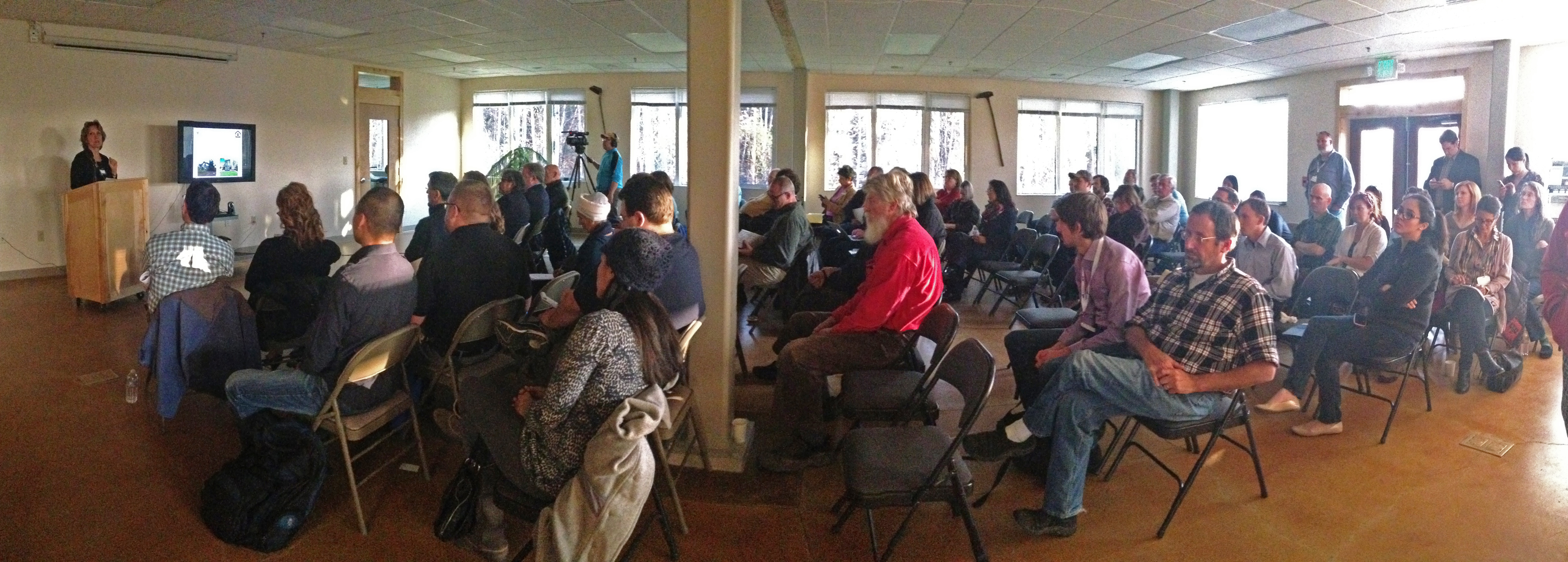
The First Roundtable on Holistic Design at CCHRC in Fairbanks, October 2014.
Tens of millions of dollars are spent each year on housing and infrastructure to improve quality of life in rural Alaska – wind turbines, power houses, roads, housing, weatherization, plumbing, and much more. Meanwhile, many Alaska communities are struggling to survive in the face of energy costs, climate change, coastal erosion, lack of jobs, and other challenges.
Plenty of organizations are trying to help – state and federal agencies, regional corporations, housing authorities, tribal entities, nonprofits – each focused on an individual aspect: energy, housing, sanitation, transportation, health, local economies, culture, education. Yet rarely do we address all these pieces in a holistic approach. The evidence is everywhere: brand new $70,000 sewer lines hooked up to rotting houses; leaky homes in villages that pay $8 a gallon for heating fuel; roads built one year and dug up the next to install water pipe.
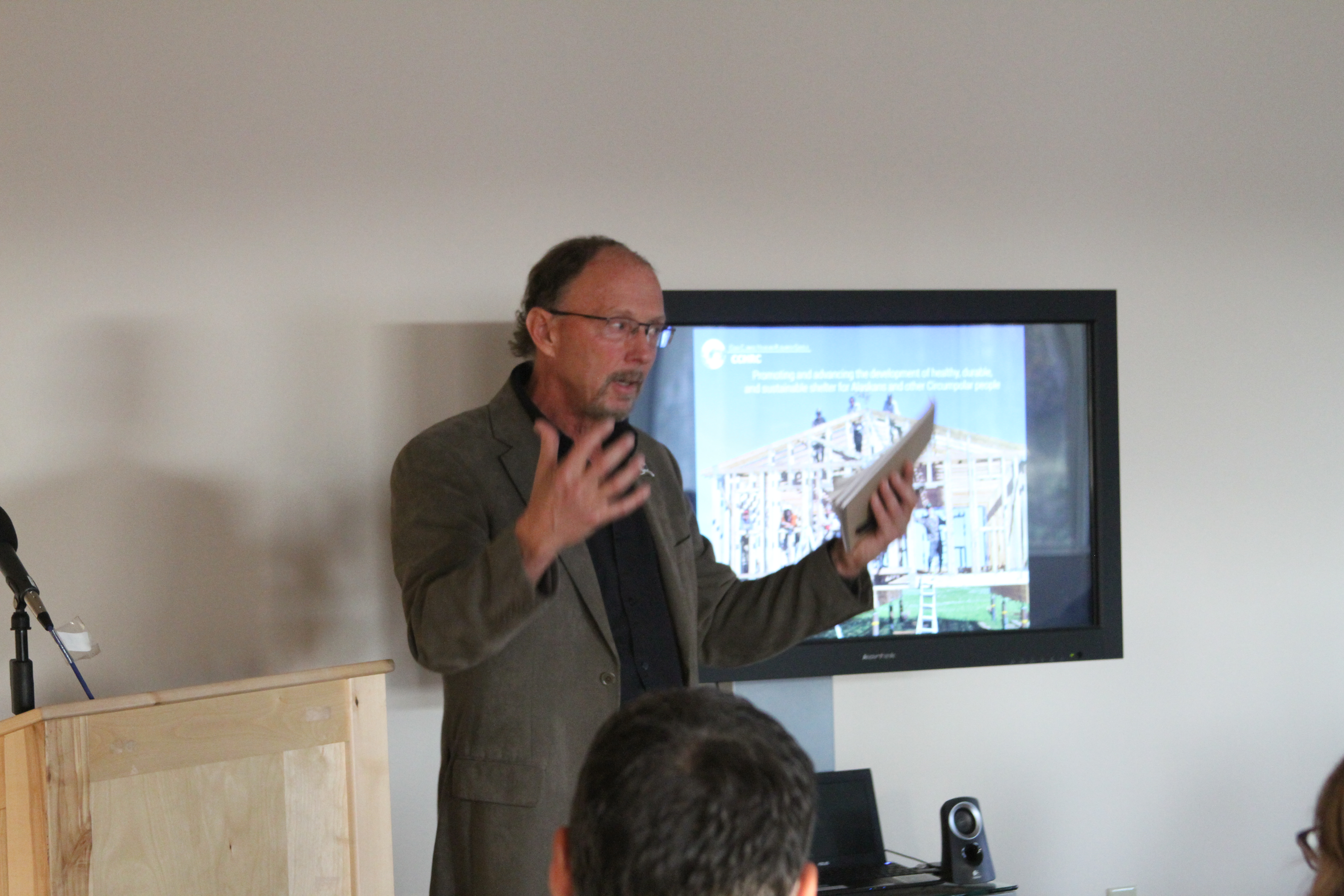
Jack Hebert with CCHRC talks about the role of energy efficient housing and indoor air quality in community development.
The Holistic Approach to Sustainable Northern Communities is a demonstration project that will factor in the many elements of community development. It started with two roundtable discussions this fall, where leaders from all levels of government and community planning came together and shared their successes and challenges, their needs and ideas for a more effective process. Now we are planning a pilot project in the Yukon Kuskokwim region that starts with one piece and builds a model of collaboration for all communities in Alaska.
Stay tuned for our next roundtable in Anchorage in December!
CCHRC is pleased to announce that it is creating a list of preferred energy auditors to perform audits as part of the Fairbanks Nonprofit Retrofit Pilot project. Qualifying energy auditors in Alaska are invited to apply at www.cchrc.org/fnrp.
The pilot project connects the nonprofit community with financing to enable energy efficiency retrofits. CCHRC will evaluate the process and outcomes of this model to better understand several factors: the extent to which financing can replace grant funding for energy efficiency audits, the extent to which program delivery is enhanced through reduced energy costs, and the extent to whichpartnerships with the nonprofit sector are necessary to advance energy efficiency retrofits from audit through construction.
The Southeast Alaska Conservation Council seeks a motivated and passionate individual to work on rural energy issues. The Energy Coordinator position is responsible for assisting rural Southeast communities in identifying ways to alleviate high energy costs and reduce their dependency on fossil fuels. The position involves working very closely with local, regional and state partners in developing effective strategies to increase local engagement, provide energy educational opportunities and explore efficiency measures and renewable energy alternatives for heating, electricity and transportation.
Responsibilities:
Work within a broader partnership on efforts and demonstration projects that integrate multiple components of community sustainability including affordable energy, economic development, the environment, social well being and cultural values.
Travel extensively to communities to maintain current relationships and build new relationships with tribal partners, schools, utilities, municipalities and boroughs, conservation organizations and other non-governmental organizations. Coordinate with all partners to keep them informed of efforts, programs and opportunities for energy related involvement
Research and help prioritize individual community energy options, work closely with partners and local leaders to offer recommendations on near and long term efforts
Engage multiple stakeholders in community energy planning and visioning
Facilitate community energy meetings and help develop local energy committees
Facilitate, partner on and provide technical support for energy demonstration projects
Work with local campaign staff in compiling updated energy baseline information for community buildings in order to accurately measure the impact of efficiency and renewable energy efforts
Track performance of demonstration projects through on-line and site monitoring, develop reports on performance and lessons learned in order to strengthen future efforts and help guide policy
Work with community and regional partners on developing resource assessments and feasibility studies to prepare for future project level funding
Provide direct support, guidance and training opportunities for community-based program staff in Kake, Hoonah and Wrangell
Conduct outreach to SEACC members and the public through workshops, publications, alerts, blogs, reports and media
Work with SEACC staff and campaign on program development which will include actively reevaluating goals, objectives and strategies based on organizational reflection and community and partner feedback
Assist community partners with the preparation of grant proposals and program budgeting
Participate in local, regional and statewide energy planning meetings and events
Carry out personnel administrative tasks such as communications, reporting and maintain records for convenience of successive members and other staff
Desired Qualifications:
We are seeking a person who is highly motivated, a quick learner and able to work independently with excellent time management and communication skills. Experience working in rural Alaska communities is preferred. Familiarity with the regional energy framework of Southeast Alaska, as well as knowledge about energy efficiency and/or small scale renewable energy applications is highly desired.
The Energy Coordinator position will serve as a “technical team” member providing guidance and support to staff living in rural communities, and helping to coordinate efforts and share information among communities.
Compensation: Annual salary DOE; full health benefits
To apply: Email cover letter, resume, writing sample, and references to Todd Bailey at todd@seacc.org. Please put “Energy Coordinator” in the title.
The Cold Climate Housing Research Center is initiating a pilot project this month to help Alaska nonprofits save money by making their buildings more energy efficient. The application process is now open at http://cchrc.org/fnrp.
The Fairbanks Nonprofit Retrofit Pilot provides energy audits and low-interest loans to nonprofit organizations and tribal building owners as well as guidance through the entire energy retrofit process including arranging an energy audit, helping to prioritize energy improvements, helping to arrange financing, and coordinating contractors to complete the retrofit.
In recent years, thousands of homeowners, small businesses and public buildings have taken advantage of energy efficiency programs to reduce operating costs. Homeowners have cut fuel use by an average 33% annually through AHFC’s Home Energy Rebate Program.
The goal of the retrofit program is to help the nonprofit sector substantially reduce its energy costs so that organizations can spend more on their mission and explore the cost-savings of retrofitting at a community-scale.
The pilot is made possible by $250,000 from the Denali Commission for technical assistance and energy audits. Financing will be provided by Rural Community Assistance Corporation, a nonprofit development organization serving communities in the western United States, under a $2.5 million loan from the Rasmuson Foundation.
If successful, the pilot project may pave the way for a statewide private financing model for small to medium sized energy efficiency projects.
For more info, contact Danny Powers at CCHRC at 907-378.3623 or danny@cchrc.org.
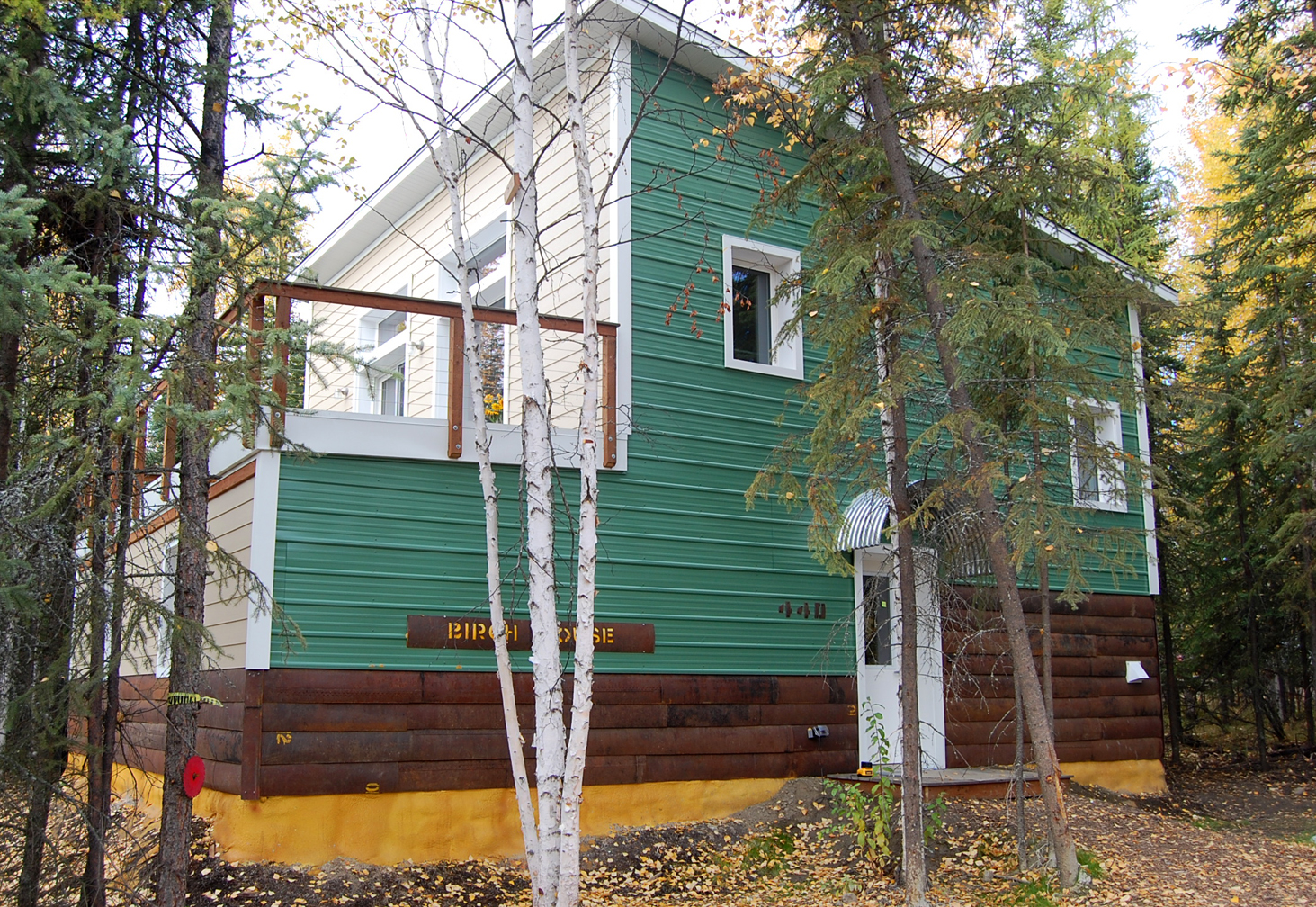
The Birch House at the UAF Sustainable Village used the equivalent of 367 gallons of heating oil in the first year of occupancy, less than half as much as an average home its size in Fairbanks.
The Sustainable Village homes at the University of Alaska Fairbanks are a new model of energy efficient, affordable housing for Interior Alaska. The four 1,600-square-foot homes were built at the university in 2012 to demonstrate that super-efficient, climate-appropriate houses could be built without breaking the bank. University students helped design and build the homes, adding their own ideas about sustainable campus living.
The homes incorporate experimental techniques, like solar hydronic heating and adjustable foundations on permafrost, that should reduce energy costs and improve the durability of the homes. CCHRC, along with student residents, have been monitoring the energy use and indoor air quality at the homes for the past year.
On average, the homes used less than half as much energy as an average new house in Fairbanks. The lowest user was the Willow house, going through the equivalent of 366 gallons of heating oil No. 1, or 48.3 million Btu, for both heating and domestic hot water from September 2012 to September 2013. The average same-size house in Fairbanks uses about 920 gallons, according to the Alaska Housing Finance Corporation’s database. Even the average new energy efficient house uses about 660 gallons per year. That’s more than the biggest energy user at the Village, the Spruce House, which used only 463 gallons of oil equivalent.
How do the homessave energy?
The homes are super-insulated and incorporate energy-saving features like heat recovery ventilation, triple pane windows and Energy Star appliances. The Willow House has a REMOTE wall with 8 inches of exterior foam insulation and 3.5 inches of fiberglass batts inside the wall cavity (for a total of R-51). That’s more than twice the insulation value of a conventional 2×6 wall with 5.5 inches of fiberglass insulation. Space heating and hot water are provided by a propane boiler and three solar thermal collectors.
The Spruce House, on the other hand, has a double wall filled with 18 inches of cellulose insulation (R-64), and a forced air heating system with a small diesel heater that heats fresh ventilation air.
Because each house has roughly the same heating load, the difference in energy use can be largely explained by the differing mechanical systems and the occupants themselves. What’s the set point of the thermostat? How long are the showers in use?
A cost analysis showed the Sustainable Village homes were competitive with other energy efficient building in the Interior — averaging about $185 per square foot, including water and wastewater, electrical, and roads (not including land).
CCHRC also monitored soil temperatures at the homes to study the effects of different foundations on the ground. The two western homes are built on permafrost, or permanently frozen ground, only 2-3 feet deep in the summer. The trick when building on permafrost is to isolate the house from the ground, so heat doesn’t leak into the soil and thaw the frozen ground (which can cause expensive structural problems). These homes used experimental foam raft foundations, steel floor joists with a thick layer of polyurethane spray foam designed to protect the permafrost. Sensors underneath the house show that the foundations are working so far: the temperature at 4 feet deep has risen less than 5 degrees, and at 24 feet has remained the same.
See the full report on first year performance of the homes here.
The hilly areas containing fractured schist and rock around Fairbanks are known for having high concentrations of radon. A good radon mitigation system will ensure healthy indoor air quality. Your single best chance at dealing with radon issues is during new construction.
In this video, Ilya Benesch, building educator at the Cold Climate Housing Research Center, demonstrates the essential steps of installing a radon mitigation system for a slab-on-grade foundation.
The video follows EPA guidelines for installing radon mitigation systems found here:
The log home made of freshly peeled white spruce sitting on the side of the road about two miles north of Nenana could be the first of many. At least, that’s what the Toghotthele Corporation is hoping.
“We’ve already had four people pull into the driveway and say, ‘Is this for sale?’ We have interest just from passers-by seeing the activity going on. If these guys are interested in it, we could sell them a kit,” said Jim Sackett, CEO of the Nenana-based corporation.
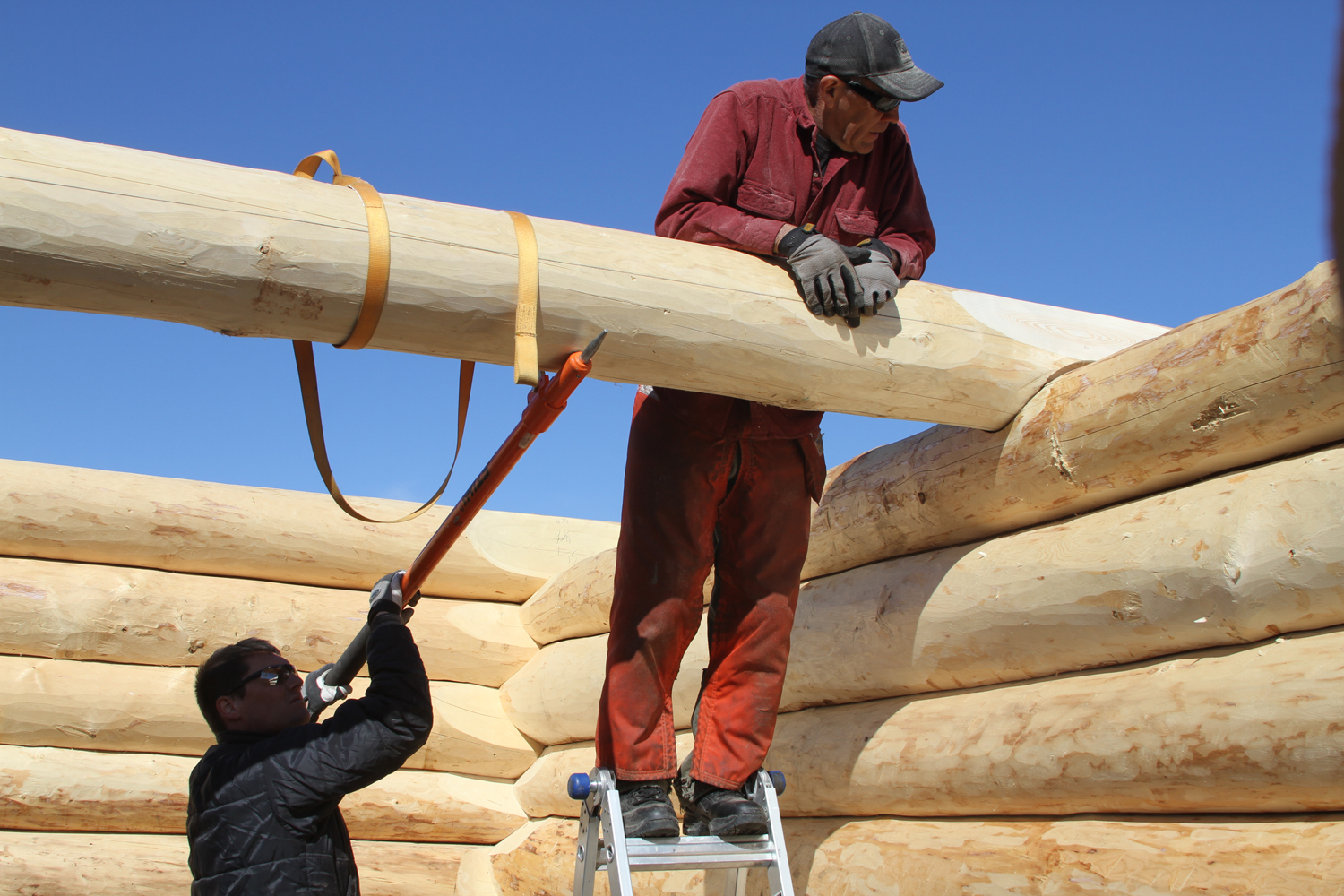
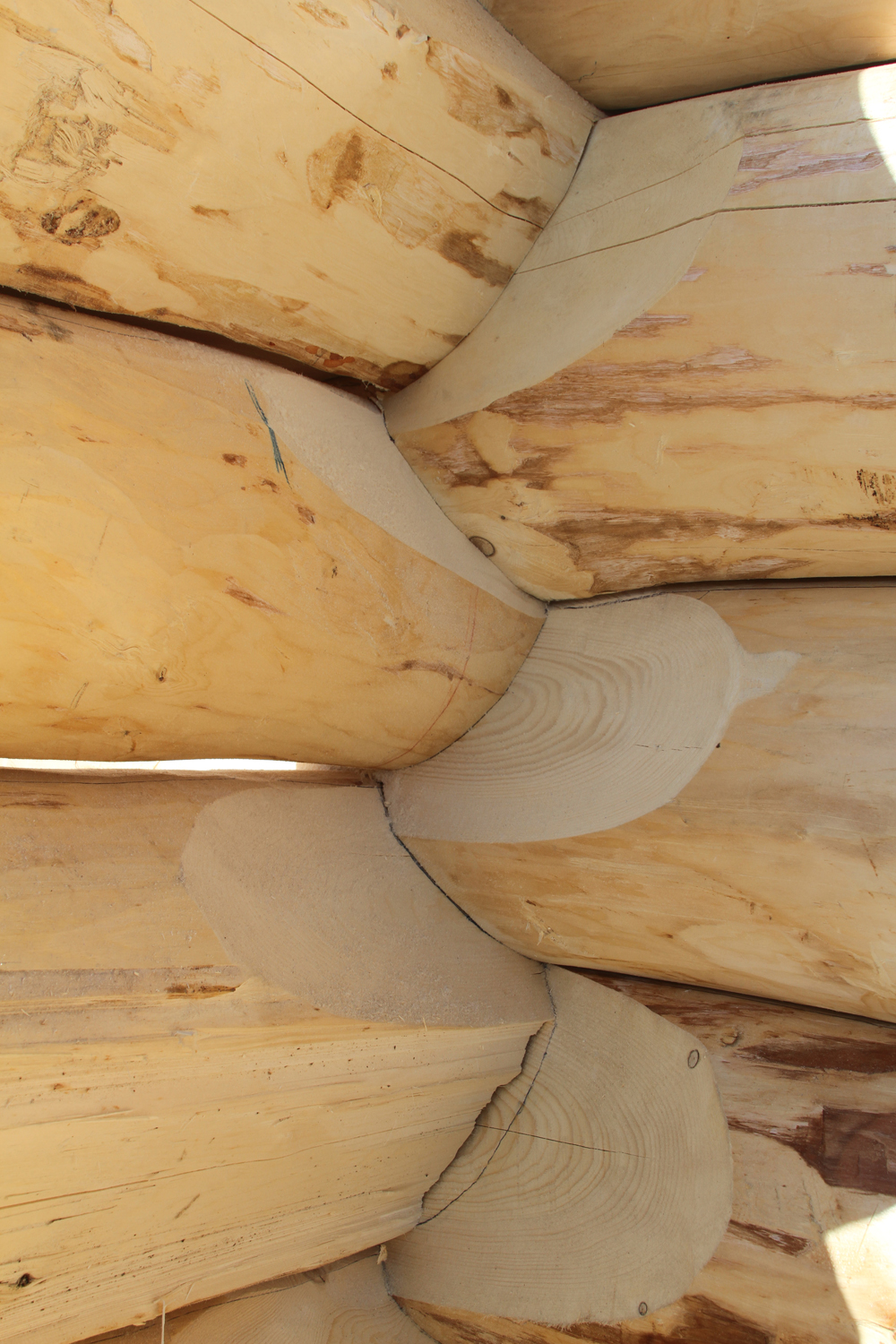
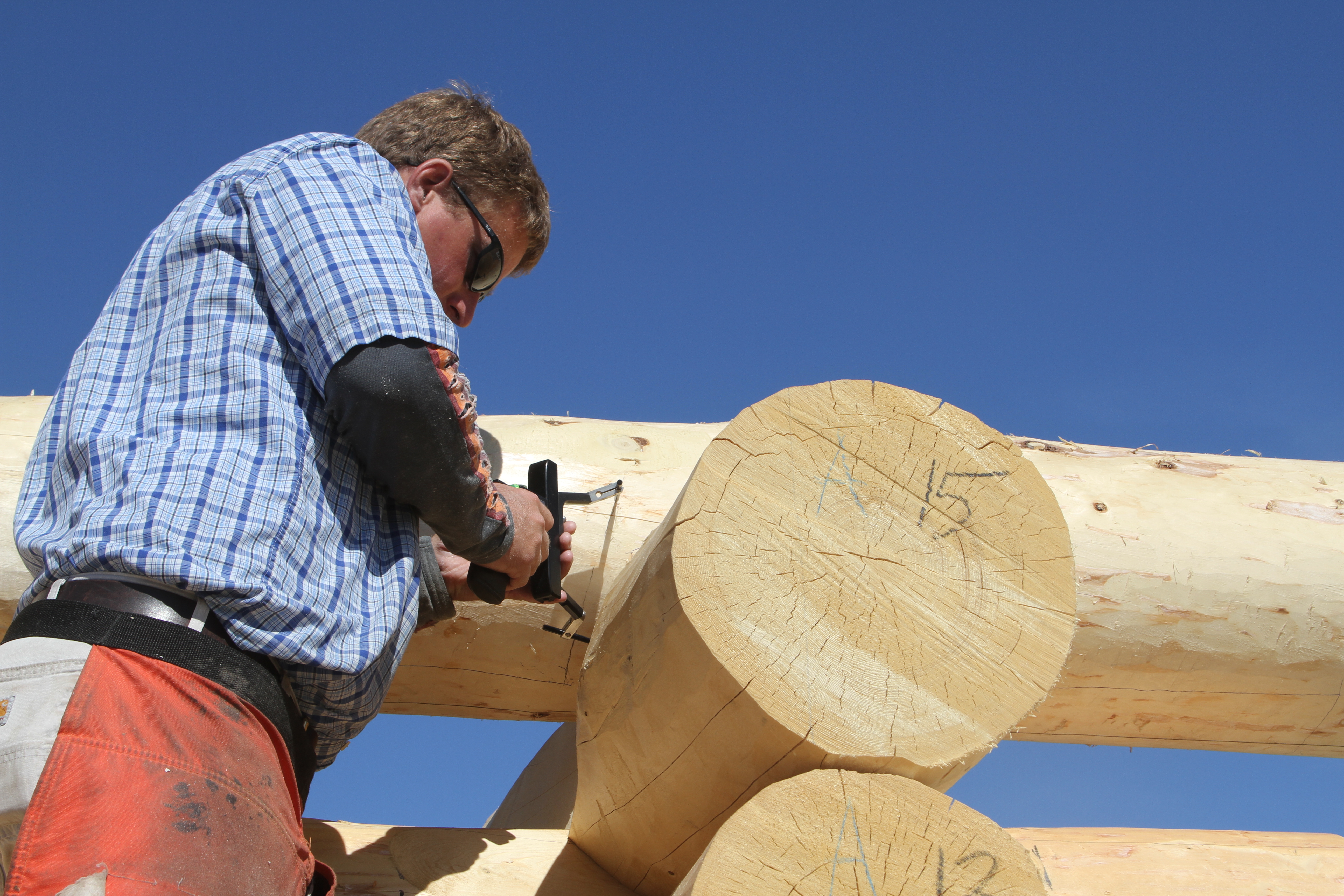
Earlier, a group of students placed the tie log for a roof truss. This included scribing the logs (or tracing the shape of one log onto the other), cutting the notches, and using an excavator to lift and position the tie log on top of the side walls.
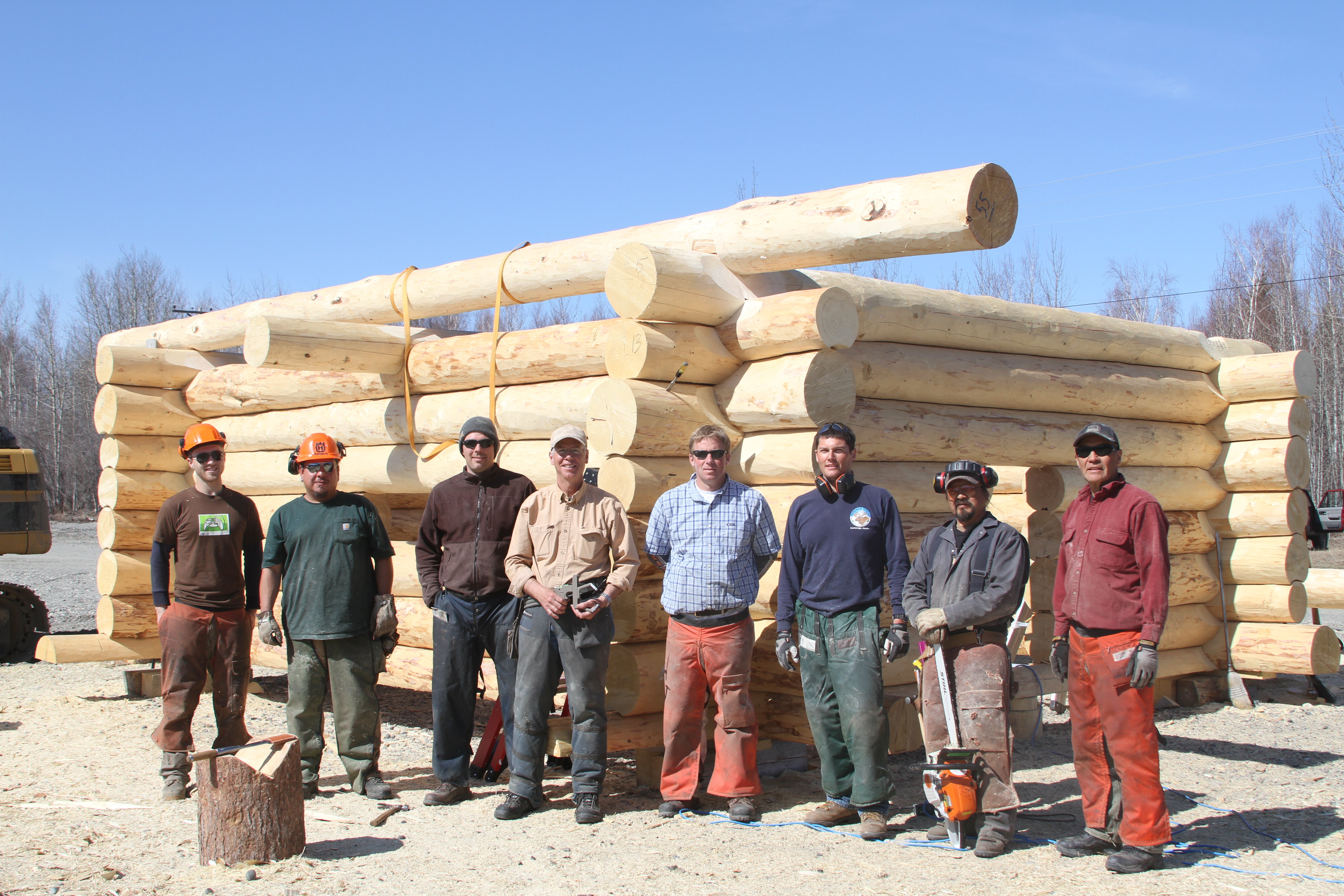
The 16-by-20-foot full scribe log home is the product of a three-week construction workshop that wrapped up earlier this month offered by Toghotthele and the University of Alaska Fairbanks Cooperative Extensive Service. It was taught by Robert Chambers, who teaches log building around the world, and local log builder Rich Musick.
The students are Toghotthele shareholders, plus a contractor from California who flew up specifically to take the class. They’re learning the craft not only to build log homes of their own, but also to possibly start a new business in Nenana that uses local resources and provides new housing.
Sackett is anticipating a potential housing boom if oil is found during exploratory drilling in the Nenana Basin this summer. Toghotthele owns roughly 140,000 acres of white spruce and is developing two subdivisions for construction.
“If people start moving into the area to take oil-related jobs, we don’t have much of a housing surplus in Nenana. Log homes are a natural fit to Alaska in general and specifically to Nenana. About half the homes in Nenana are log already.”
Full scribe construction means the logs retain their natural shapes and irregular surfaces. They are precisely hand-fitted to each other with no gaps, nails or other hardware. The method Chambers is teaching allows for logs to shrink as they dry (which typically takes up to six years) to ultimately form an airtight joint.
During the course, students practiced techniques familiar to log construction including scribing, notching, using chain saws and hand tools for sculpting and fitting, and other tools like spuds (for removing bark) and plumb bobs and levels (to orient layout lines and logs in horizontal and vertical directions relative to one another).
In today’s trend toward super-insulated homes, there is debate about how much insulation is enough. When it comes to logs, the R-value of wood is lower than other insulating materials. Wood is about R-1 per inch, compared to fiberglass (R-3.2 per inch) or rigid foam (R-4-5 per inch). So in theory, it would take a 16-inch log to achieve the same R-value as a standard 2×6 wall filled with fiberglass (if you don’t count extra heat loss through the studs).
“By the numbers, you’d be really hard-pressed to find Interior Alaska logs big enough to perform above R-21. But it’s a matter of perspective. You can build a decent wall system, and by making improvements to the rest of the shell — putting in an efficient heating system, good windows, good foundation and roof insulation — you can do really well,” said Ilya Benesch, building educator at the Cold Climate Housing Research Center.
As Chambers puts it, the embodied energy of building with local logs (the total energy used to produce all the building materials) beats most other construction methods.
“Homes that have a lot of concrete, aluminum and glued manufactured wooden products have a very high embodied energy,” he said.
In addition, well-built log homes can last 1,000 years, making them even more sustainable, he said.
You also can build very tight homes using full-scribe construction. Chambers seals the space between logs with a double gasket made from open-cell foam that is compressible but acts as an air and vapor barrier.
He noted a log home in Soldotna that tested at 0.5 air changes per hour, which rivals some of the tightest homes out there.
Chinking with elastic caulking is another way to air-seal joints between logs, though alters the appearance of the otherwise natural fit.
As Sackett points out, some Alaskans just prefer log.
“Log is just natural to Alaska. A lot of the early homes were log, and people just have this attraction to log homes,” he said.
“It’s a resource Toghotthele already owns, so figure out what you can do with what you already have.”
See a sneak preview of CCHRC’s Air Source Heat Pump presentation to be given at the Rural Energy Conference in Anchorage in May. Building Science Research Director Colin Craven outlines some of the opportunities and hurdles for air source heat pumps in Alaska.
More info on the conference here
More info on air source heat pumps here
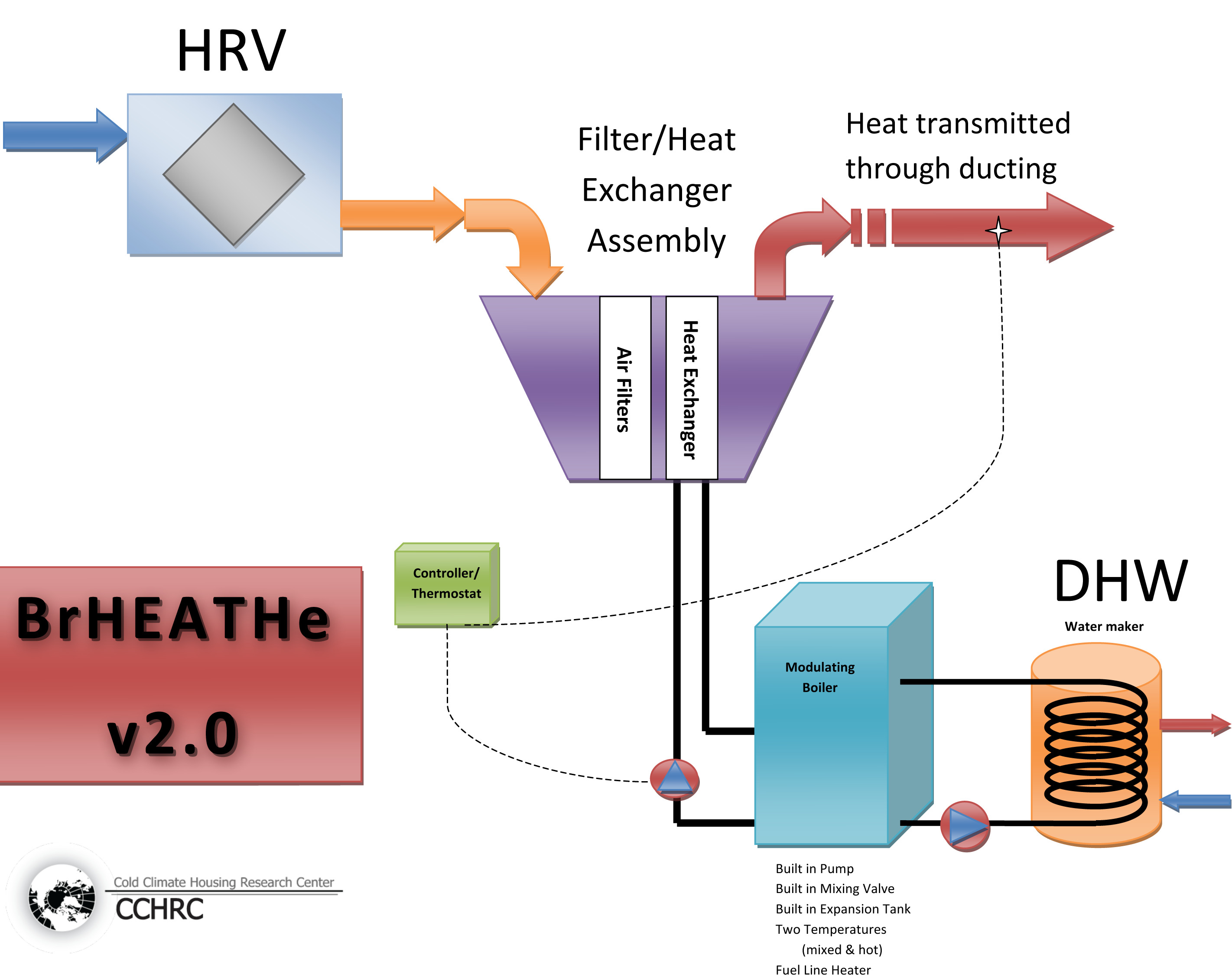
Schematic of the BrHEAThe system being used in the Buckland prototype house.
A new prototype system developed by CCHRC locks together heating and ventilation—two crucial elements of life in Alaska.
CCHRC researchers developed the integrated heating and ventilation system, called BrHEAThe, to ensure that new energy efficient homes are getting ample fresh air.
As homes are being built tighter in Alaska to save energy, less air is able to leak into or out of the building, so things like water vapor and chemicals generated from cooking or off-gassing furniture can be trapped inside. Without ventilation, they can build up to harmful levels for both humans and buildings.
Some Alaska homeowners are wary of mechanical ventilation, such as fans or heat recovery ventilators (HRVs), because they use electricity and replace heated air with cooler air. As a result, some people turn off or disable their ventilation systems.
The BrHEAThe system marries heating and ventilation so that incoming air is always hot and fresh.
Here’s how it works.
The HRV brings in fresh air and recovers most of the heat from outgoing stale air. The fresh air enters a filter box and then passes through a heat exchanger, absorbing heat from a coil connected to a boiler.
“If we pump hot water through this heat exchanger, it’s going to warm the air that moves across the heat exchanger from 40 degrees to 140 degrees,” said CCHRC research engineer Bruno Grunau.
The heated air is then distributed via ductwork throughout the home.
The high efficiency boiler also heats a domestic hot water tank.
During a test run in the lab, the system worked smoothly: 25-degree air from outside was raised to 58 degrees by the HRV, then further boosted to 139 degrees by the heat exchanger.
The BrHEAThe system will be installed at a CCHRC research prototype home in Buckland that breaks ground this week.
“As building envelopes are getting warmer, heat loads are being reduced. As a result, systems like this can now be used to meet heating needs,” Grunau said.