The UAF Sustainable Village is a community for students who are passionate about the environment and reducing their carbon footprint. It is a collaboration between the UAF Office of Sustainability and the Cold Climate Housing Research Center to build and research energy efficient housing, renewable energy, and innovative heating and ventilation systems. Students at the Village make a commitment to sustainability through monitoring the systems, conserving energy and water, and helping develop additions like a greenhouse or community center.
On Wednesday we will celebrate the opening of the Village with a ribbon cutting on-site and words by CCHRC President Jack Hebert, UAF Chancellor Brian Rogers, student workers and student residents.
For more info contact Molly Rettig, Communications Coordinator, at molly at cchrc.org.
Wednesday October 3, 2012 at 12 p.m.
11:30—Press invited to tour the interior of a student home
12:00—Ribbon cutting & brief words by Chancellor Brian Rogers & Jack Hebert
12:15—Move to CCHRC for brief ceremony—student posters on display
12:30—CCHRC President/CEO Jack Hebert welcoming
12:40—Words from student on design/construction team – Skye Sturm
It’s finishing time at the Sustainable Village! The devil is in the details, and we’re detailing ceilings, floors, corners, railings, trim, and everything else. The time lapse shows workers installing beautiful birch paneling on the upstairs ceiling as well as cabinets and appliances.
This week we tried a new building system at the Village–a cellulose REMOTE wall in the SW house. A REMOTE wall has the majority of the insulation value, or R-value, outside the sheathing rather than inside. Up to this point, we always used rigid foam on the exterior. But since one goal of the Village is to test new techniques for both cost and energy use, we decided to try a REMOTE wall with batts as interior insulation and 9 inches of cellulose on the outside.
The house has two sets of studs, with sheathing applied to the inner wall. The inside wall cavity is filled with a recycled batt insulation. The outer wall was wrapped in Tyvek. To insulate the outside wall cavity, we hole-sawed a 6-inch hole in the sheathing in each wall bay (on both floors) and sprayed in 12 inches of dense-pack cellulose. Those holes were patched with poly sheeting and acoustical sealant. The whole wall is 18 inches thick.
We also installed birch paneling ceilings, cabinetry, and ventilation systems in 2 of the homes. The homes are mostly sided and are starting to look very livable!
As the daylight wanes to only 18 hours a day, we are getting situated to capture this heat at the Sustainable Village. The solar collectors are up on the northeast and southeast homes, which both have three 4-foot-by-10-foot collectors mounted on the south-facing wall just under the roof. The system will feed heat into radiant tubing in the concrete floor slabs, and will also dump heat into a 120-gallon solar storage tank in the house. We are adding temperature sensors and flow meters to each system to monitor how much heat is used.
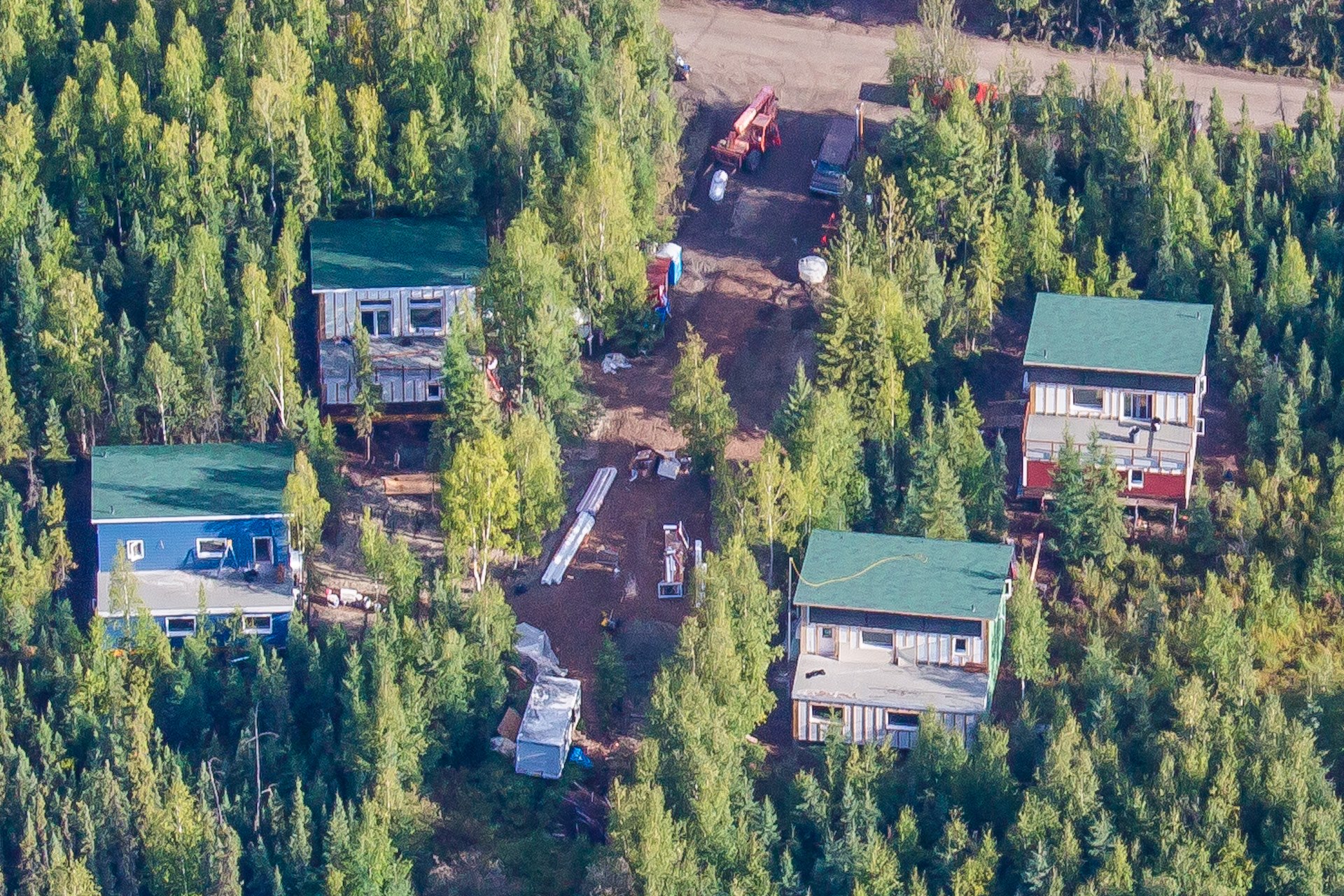
Also, the homes have skin (for the most part), i.e. metal siding. Two green, one blue, and one gray with patches of other colors and salvaged dredge pipe. They look cheerful and also at home in the spruce forest.
The Village now has roofs. Roofers came and installed the green rubber-based shingles on all four homes in a single day. We also blew in roughly 2 feet of cellulose insulation underneath the NW roof, which will have a continuous 2-inch air gap between underneath the roof deck to keep the roof cold and dry.
We continued building REMOTE walls on the NE home, which will have 6 inches of interior fiberglass insulation and 8 inches of EPS foam board for 2/3 of total R-value on the outside.
During Week 12, we insulated walls of the second house with six inches of fiberglass batting on the inside and 8 inches of foam board on the outside. We also blew two feet of cellulose insulation into the roof of the first two homes. Cellulose is made from recycled material like newspaper and cardboard.
We also began installing windows in the homes. All windows are triple-pane, low-e argon filled, designed to minimize heat loss and avoid condensation in an extreme climate.
Each home will be sided with a different color combo, with a mix of metal siding and recycled steel pipe.
Week 11 was a productive one at the Sustainable Village. Workers continued to install EPS foam (2 layers of 4-inch sheets) in three of the homes with a REMOTE wall system. We also sprayed polyurethane foam around the rim joist to seal it up.
Each home has a large, south-facing deck on the second floor. We finished the decks with a spray-applied elastomeric coating, the same stuff used for truck-bed liners, a durable, weather-proof material that is less material-intensive than wood and requires no penetrations in the ceiling. We sprayed foam insulation underneath the deck in the first-floor ceiling to create a warm thermal break.
This week we started hanging Sheetrock in the homes where we had already finished plumbing and electric. The interior is starting to look livable! Now it’s time to select 16 lucky students who will make the Village home. If you’re interested, visit http://www.uaf.edu/sustainability/sustainable-village.
Takpaan Weber is a UAF student from Anaktuvuk Pass, a small Iñupiat village in the Alaska Brooks Range. She describes her experience working on the UAF Sustainable Village and other low-energy experimental prototype homes she has helped build in rural Alaska.
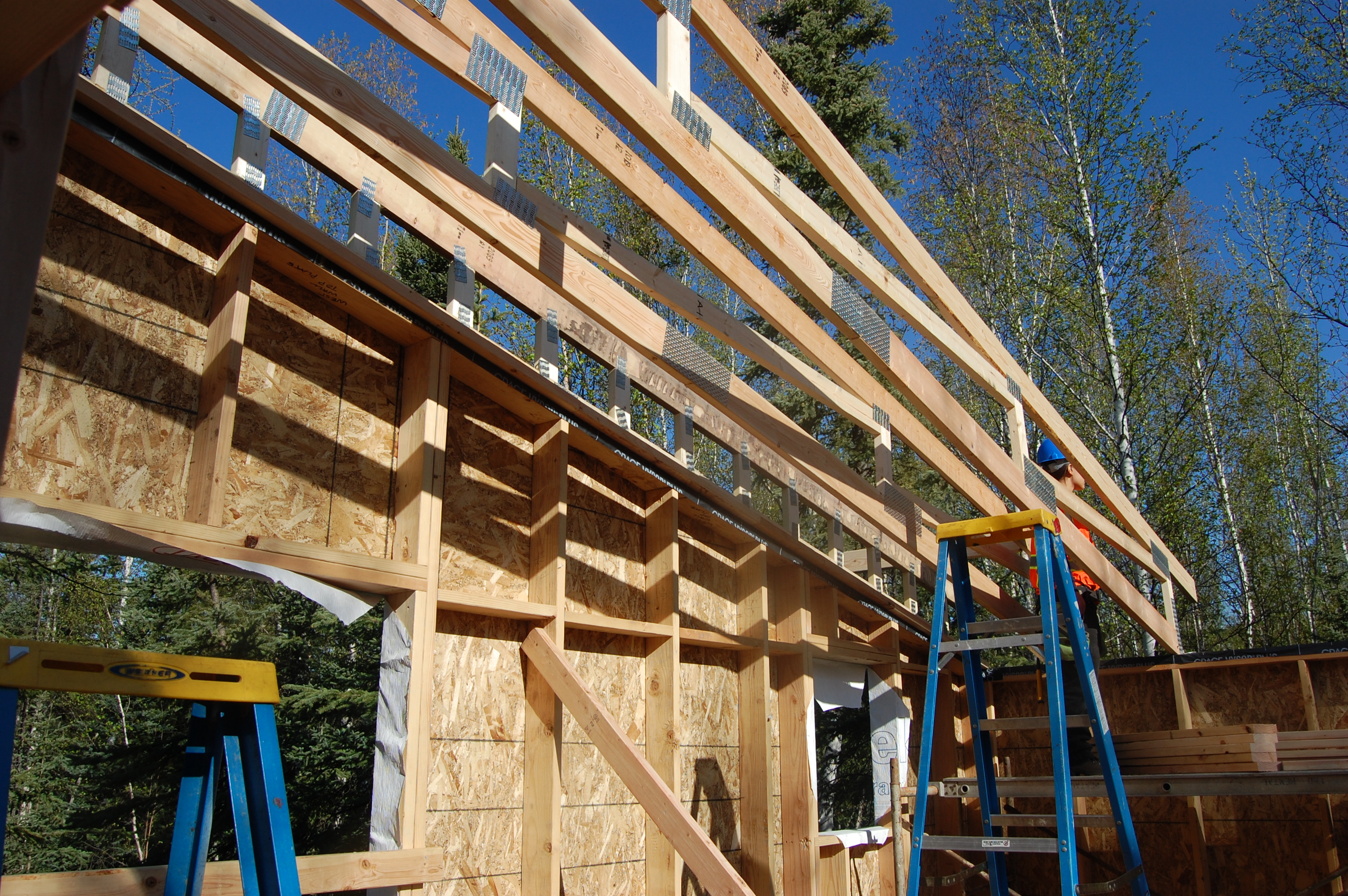
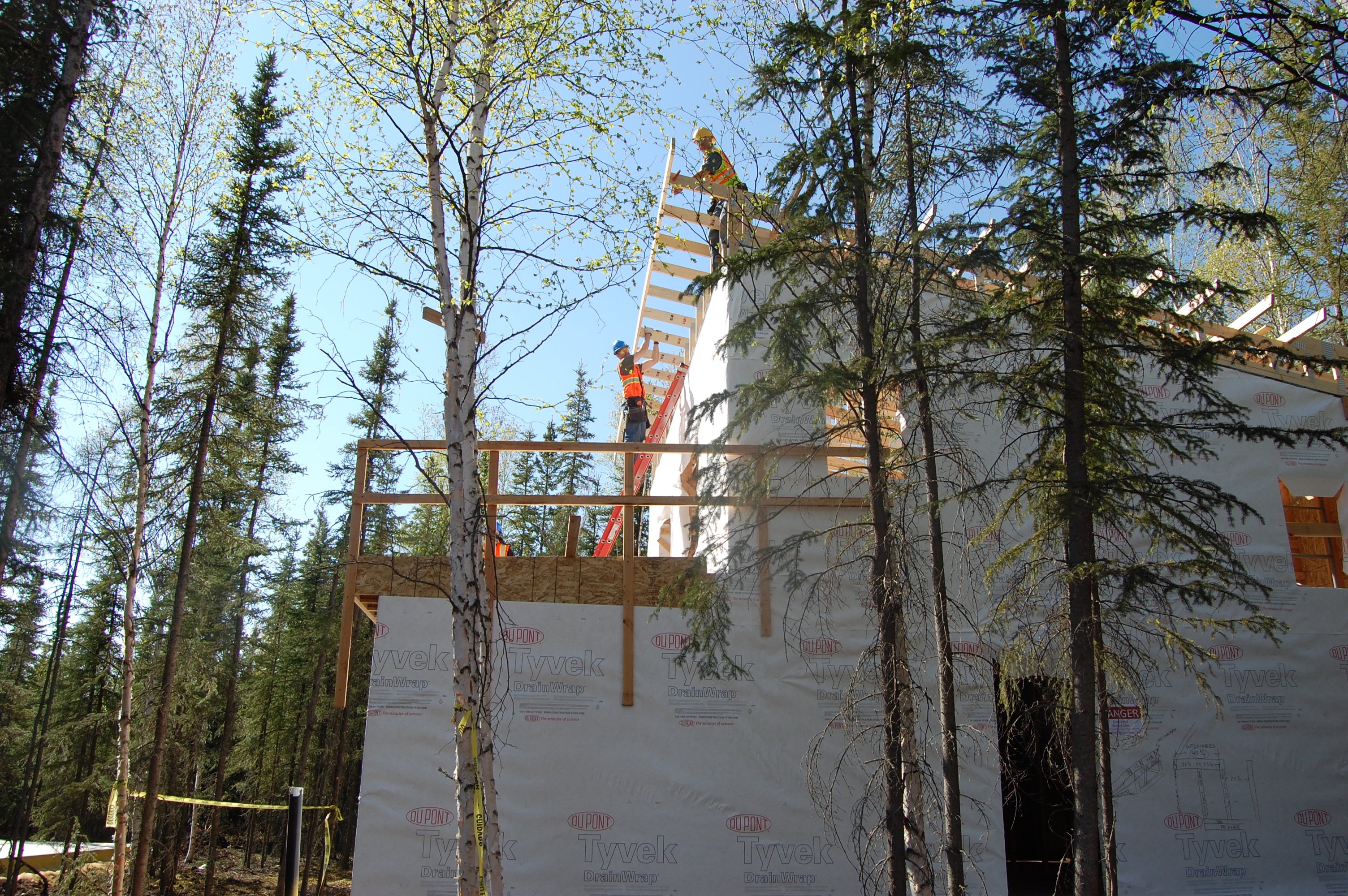
Framing is underway on the 4th and final house. Workers began applying ceiling vapor barriers and Grace rain and ice shields (which act as a drainage plane) to the fully framed homes. Now we’re exploring options for siding and interior finishing, looking at a combination of donated, market-value, and reclaimed materials.
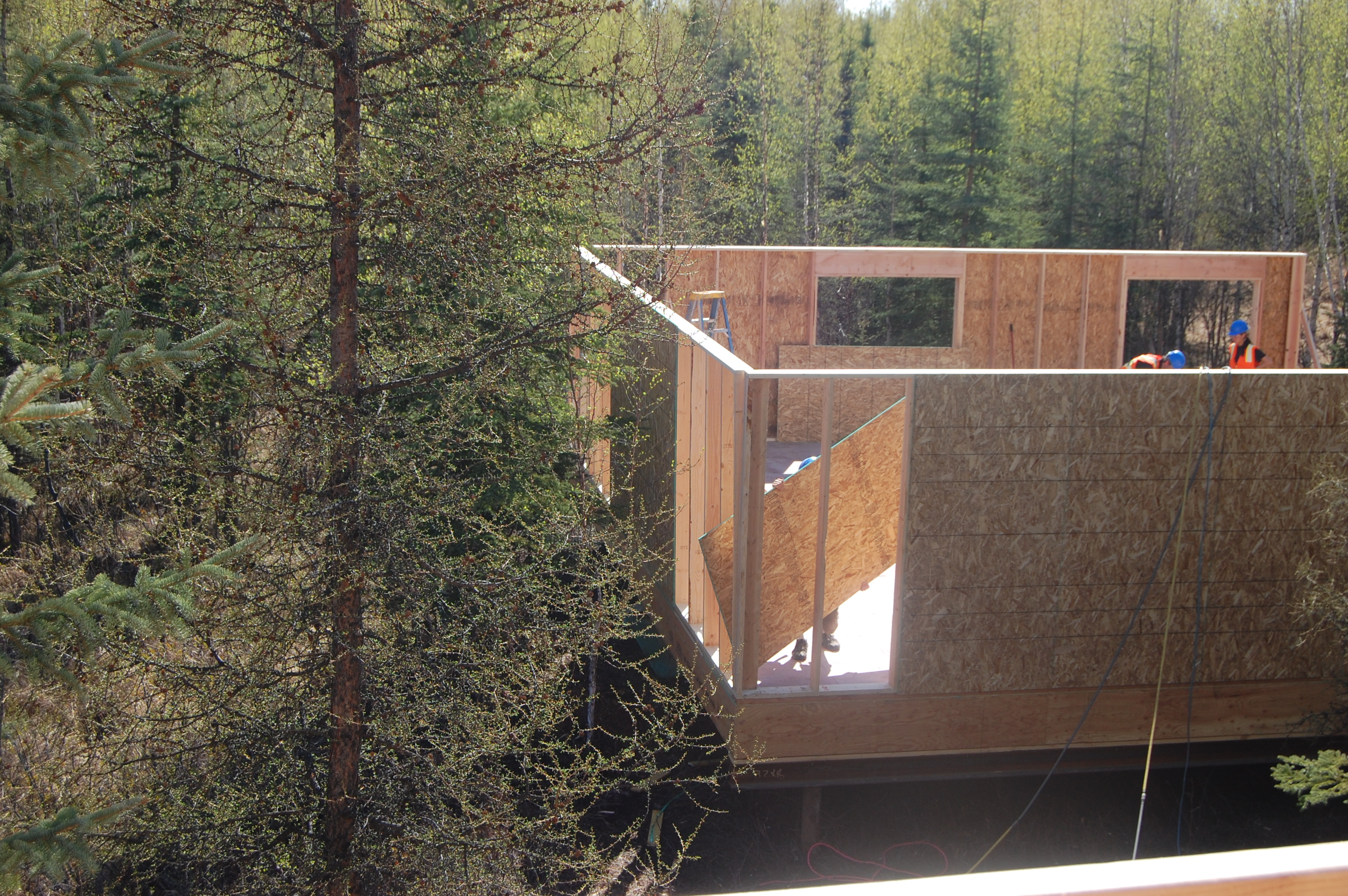
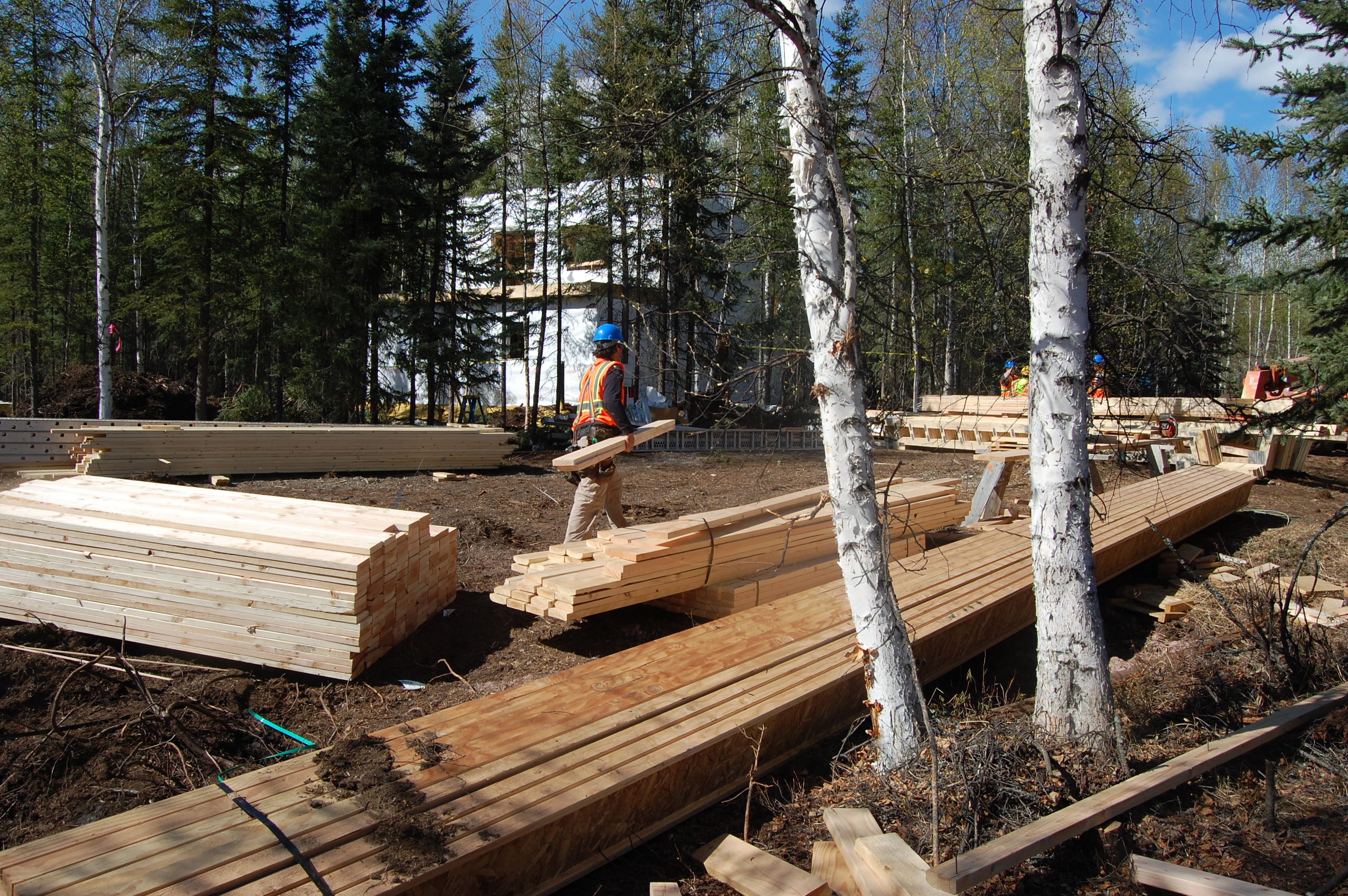
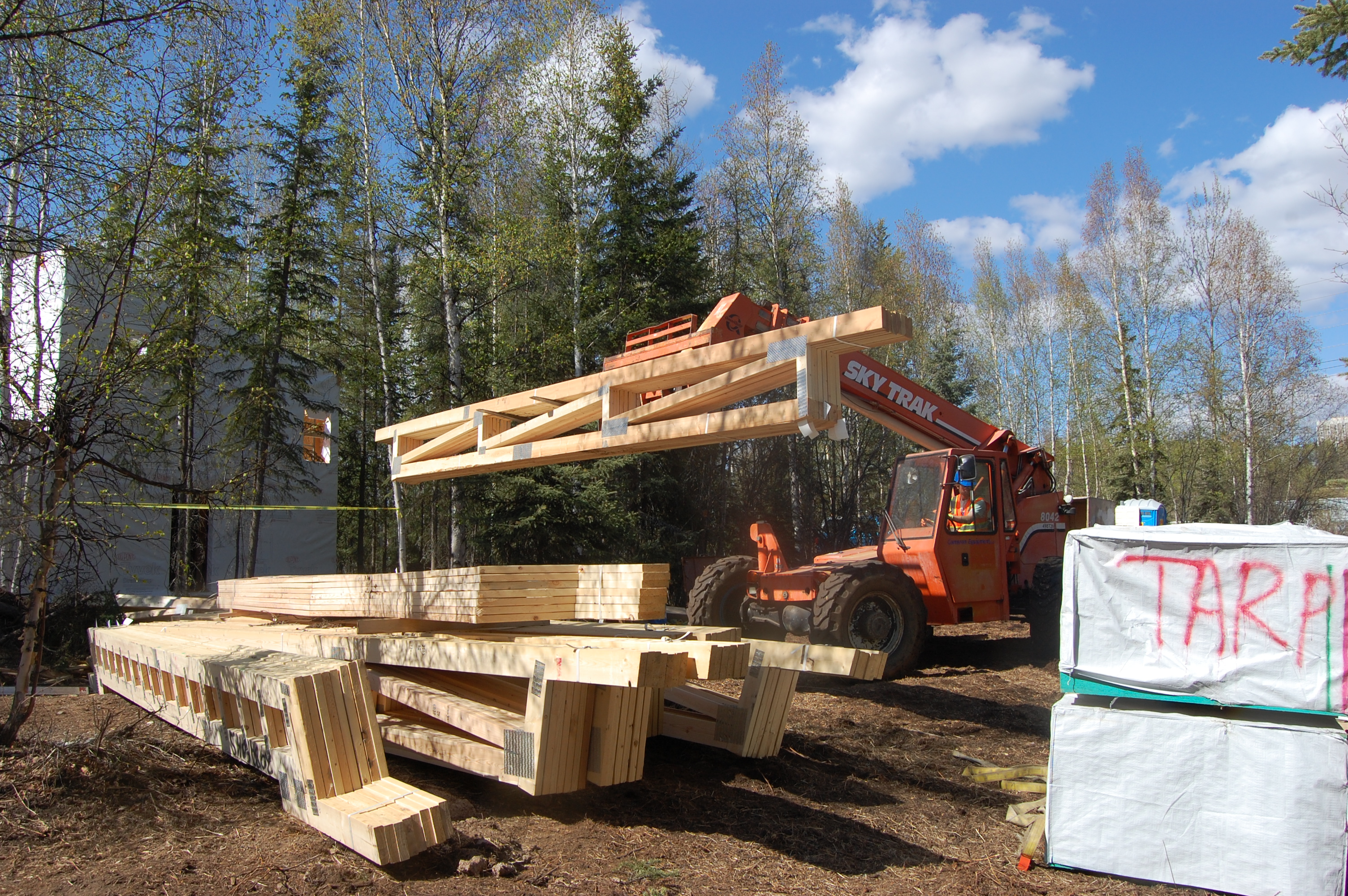
During Week 6, we started framing the third (SE) house and laying out trusses for the two northern homes. Two more UAF students began working at the site for a total of four. The crew is jelling and construction is on schedule! It warmed up to 65 degrees this week, and the T-shirts and bug dope came out. Next week we are planning to finish roofs on the northern homes and begin plumbing and electrical work. Then we’ll add sheathing and trim. Meanwhile, we’ll begin framing the fourth and final house, which will likely have the Reina Wall–a double wall with thick blown-in cellulose insulation developed by local builder Thorsten Chlupp of Reina, LLC.