Making Houses Work

Promoting sustainable shelter in Alaska


Posts Tagged ‘Green Building’

What is reflective insulation and does it work in a cold climate?

Thursday, September 6th, 2012

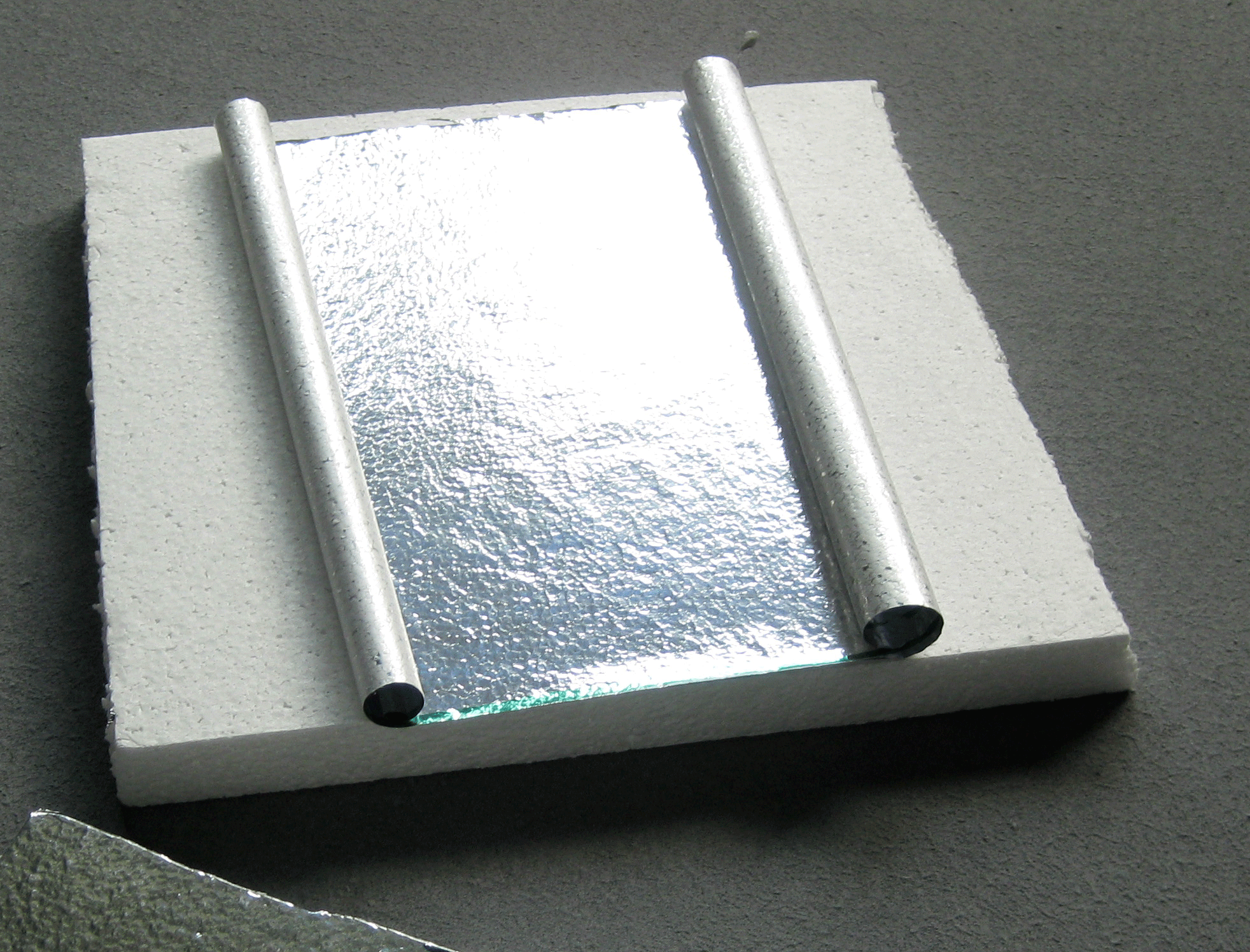
Reflective insulation is typically made of aluminum foil on a backing like rigid foam (pictured here), plastic film, polyethylene bubbles or cardboard.

Reflective insulation is a type of thermal insulation with at least one reflective surface that is installed so that the surface faces an air gap. It is usually made of an aluminum foil installed on a variety of backings, such as rigid foam, plastic film, polyethylene bubbles or cardboard.

CCHRC recently researched the use of reflective insulation in cold climate construction, reviewing other studies and testing two foam insulations with reflective facers. Researchers found that the use of reflective insulation has very little to offer cold climate construction.

To understand how it works, you need to understand the three types of heat transfer: convection is heat transfer through air movement; conduction is heat transfer through solid materials that are touching; and thermal radiation is when heat travels in electromagnetic waves, like energy from the sun.

Reflective insulations are designed to reduce heat transfer through radiation by placing a surface that reflects thermal radiation in combination with an air gap. The reflective surface reflects most of the thermal radiation toward the air space, preventing it from being absorbed by the material. If you don’t have an air space, then the heat is lost by  conduction through the reflective surface. In real life, all these forms of heat transfer occur simultaneously. (Unless you travel to space to remove the atmosphere (air) from the equation. This partially explains why NASA took an interest in reflective insulations, as they faced very different conditions than we do in Alaska.)

In warmer climates, it is common to add reflective insulation in the attic to reduce heat transfer from the roof decking to the underlying insulation, reducing overall solar heat gain within a building. But in cold climates, we have different concerns. For example, homes lose heat primarily from air leaking through the attic and walls and conduction through all components of the house. Because most heat loss occurs this way, reflective insulation would not make much difference in reducing the overall heat loss of your home.

To illustrate this point, let’s examine part of a house where a reflective insulation system is added. If you created a 1-inch air gap into the wall or ceiling with a reflective surface on one side, you could expect to gain around R-2. But walls and ceilings are typically insulated in the range of R-20 to R-60, and reflective insulation faces sharp diminishing returns if multiple layers are installed. Also remember that the air gap needs to prevent airflow and the reflective surface needs to stay clean from dust and moisture.

In addition, many reflective insulations can increase the potential for moisture problems in your home if not placed properly, as they often act as strong vapor retarders. So if you’re using these products, you need to consider not just how they affect heat loss, but also moisture flow.

Watch out for claims about reflective insulations providing benefits that go beyond R-value. All of the product’s insulation value is captured by the R-value, just like fiberglass batts, foam board, and other insulation products. If there are additional benefits, such as reducing air leakage, then those benefits can be measured and compared to other air barrier systems.

In essence, reflective insulation may help in warmer climates but is not a great fit for a cold place like Alaska.

UAF Sustainable Village Week 18: Interior finishing

Wednesday, August 22nd, 2012

It’s finishing time at the Sustainable Village! The devil is in the details, and we’re detailing ceilings, floors, corners, railings, trim, and everything else. The time lapse shows workers installing beautiful birch paneling on the upstairs ceiling as well as cabinets and appliances.

UAF Sustainable Village Week 17: the first cellulose REMOTE wall

Friday, August 10th, 2012

This week we tried a new building system at the Village–a cellulose REMOTE wall in the SW house. A REMOTE wall has the majority of the insulation value, or R-value, outside the sheathing rather than inside. Up to this point, we always used rigid foam on the exterior. But since one goal of the Village is to test new techniques for both cost and energy use, we decided to try a REMOTE wall with batts as interior insulation and 9 inches of cellulose on the outside.

The house has two sets of studs, with sheathing applied to the inner wall. The inside wall cavity is filled with a recycled batt insulation. The outer wall was wrapped in Tyvek. To insulate the outside wall cavity, we hole-sawed a 6-inch hole in the sheathing in each wall bay (on both floors) and sprayed in 12 inches of dense-pack cellulose. Those holes were patched with poly sheeting and acoustical sealant. The whole wall is 18 inches thick.

We also installed birch paneling ceilings, cabinetry, and ventilation systems in 2 of the homes. The homes are mostly sided and are starting to look very livable!

UAF Sustainable Village Week 14: Sheetrock, insulation & siding

Monday, July 23rd, 2012

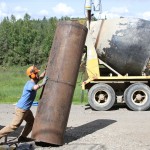
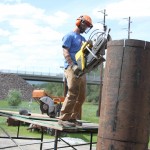
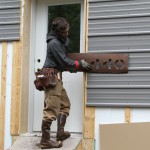
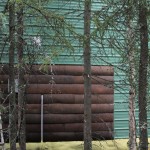
We continued siding, insulating, and Sheetrocking in Week 14. We began hanging a reclaimed steel siding that came from old dredge pipe in the surrounding area. It will provide an accent to the metal siding, adding a cool aesthetic and historical value to the homes.

http://makinghouseswork.cchrc.org/

I’ve seen more solar panels around Fairbanks lately. How do they work and what are the different types?

Tuesday, July 17th, 2012

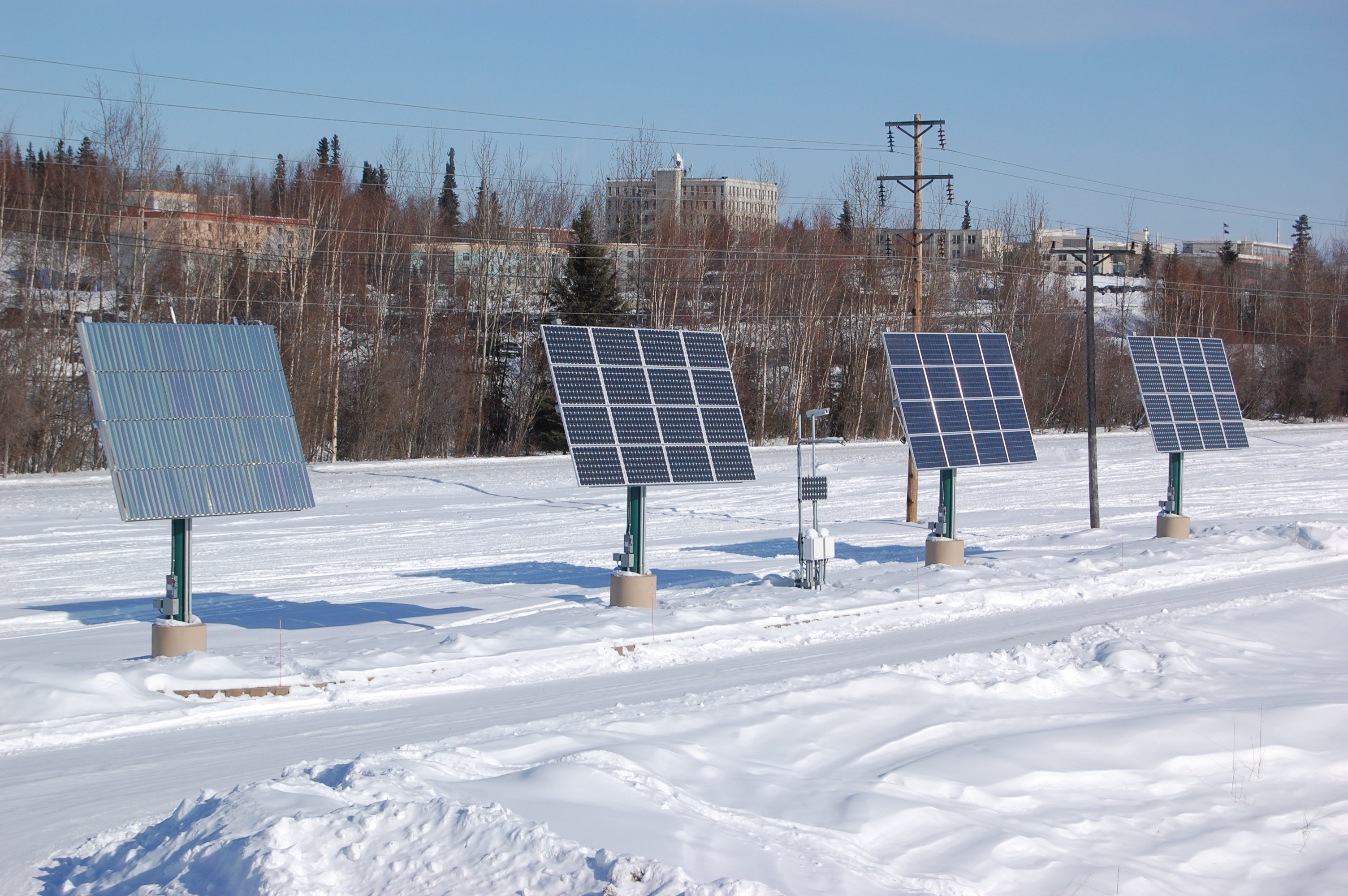
CCHRC has a 12 kW photovoltaic array that is tied to the utility grid.

Solar is a growing resource in Fairbanks, and there are two different types of panels you may be seeing around town: solar photovoltaic, which generate electricity, and solar thermal, which generate heat for space heating or domestic hot water. CCHRC uses both types of panels at the research center. While they both turn sunlight into energy for your home, they have very different applications. Considering your site conditions and heating, plumbing, and electric systems will help determine if one (or both) technologies would work for you.


What’s the difference?
Solar thermal, or solar hot water, collectors absorb heat from the sun and transfer it to water or glycol to provide space heating or domestic hot water.

The two most common types are flat-plate collectors and evacuated tubes. Flat-plate collectors are the oldest and most dominant type of solar thermal. They generally consist of a 4×8-foot glass-encased panel that contains a thin metal sheet, with a dark coating to absorb energy. Beneath the sheet are coils filled with the heat-transfer fluid. Insulation lines the back of the panel to maximize heat transfer to the fluid. Fluid circulates through the tubing, absorbing heat and then transferring it to a storage tank. A typical residential system used to supplement domestic water heating includes two panels.

An evacuated tube collector contains several rows of glass tubes connected to a header pipe. Each tube is a vacuum, which acts like a sealed thermos and eliminates heat loss through convection (due to wind). Because of this, evacuated tube collectors lose less heat to the environment than flat-plate collectors.

A small copper pipe filled with fluid (glycol, water, or some other antifreeze) runs through the center of the glass tube. The fluid heats up, vaporizes, rises into the header pipe, and transfers heat (through a heat exchanger) to another pipe filled with fluid. This fluid carries heat to the storage tank. From here, water can be used for hydronic heating and domestic hot water or converted for other uses.

Solar power
Solar photovoltaic (PV) panels convert sunlight into electricity. They have a silicon sheet that is made up of semiconductors. When light strikes the sheet, part of the energy is transferred to the semiconductors, which knocks electrons loose and allows them to flow freely through connected wires. This flow of electrons is called direct current (or DC). The current then flows into an inverter, which changes it into AC (alternating current), the power used by your appliances. This current can either be used to power appliances (if there is demand), stored in a battery, or returned to the electric grid.

Cold Climate Specifics
Fairbanks is a unique place for solar energy because of the excessive summer sun and the virtual darkness in winter months, which means a few months a year where solar doesn’t contribute much. For example, the 12-kilowatt photovoltaic array at CCHRC produces more than 10,000 kWh from March-September (about 30 percent of the building’s electric demand) but only 1,833 kWh during the rest of the year.

Most households with solar thermal systems use them to offset their primary heating sources. If you want to use solar thermal as a main source, you need some type of seasonal thermal storage system to bridge winter months. PV systems simply offset electricity purchased from the grid in most cases.

With PV, you can produce more power from your panels year-round if you keep them free of snow and change the tilt angle twice a year. The most productive months for CCHRC’s panels are April and May, when they enjoy long daylight hours and also capture reflected solar gain off the snow cover.

Different types of solar thermal panels perform better at different times of the year. For instance, evacuated tube collectors produce more BTUs during the spring and fall shoulder seasons, while flat plate collectors produce more heat during the summer.

Which ones are better to install?
A 1,000 watt PV array will produce about 1,000 kWh a year in the Interior, offsetting $210 in electricity at today’s rates. A two-panel solar thermal system could produce roughly 7 million BTUs a year, offsetting either 54 gallons of oil (saving $215) or 2,050 kWh of electricity (saving $410). In other words, homeowners with electric water heaters stand to save more from solar thermal than those heating with other fuel types.

The actual cost of solar thermal in Interior Alaska (roughly $4-$5 per installed kWh) is lower than solar photovoltaic (approximately $8-$10 per installed kWh). Yet PV panels are still more common in Fairbanks largely because they are easier to install and retrofit, don’t require plumbing, don’t have to be integrated into existing mechanical systems, and have no moving parts (whereas solar thermal systems have fluid and pumps that must be replaced over time).

The actual output and cost of your system will depend on many factors, like the solar exposure of your particular site, the type of heating or hot water system, the type and number of heat exchangers required, and others.

With the cost of conventional energy on the rise, solar is becoming an increasingly attractive long-term investment. Anyone with good solar accessibility may be wise to consider these systems as an option.

UAF Sustainable Village Week 13: roofing & cellulose

Monday, July 16th, 2012

The Village now has roofs. Roofers came and installed the green rubber-based shingles on all four homes in a single day. We also blew in roughly 2 feet of cellulose insulation underneath the NW roof, which will have a continuous 2-inch air gap between underneath the roof deck to keep the roof cold and dry.

We continued building REMOTE walls on the NE home, which will have 6 inches of interior fiberglass insulation and 8 inches of EPS foam board for 2/3 of total R-value on the outside.

UAF Sustainable Village Week 12: blown-in cellulose and windows

Tuesday, July 10th, 2012

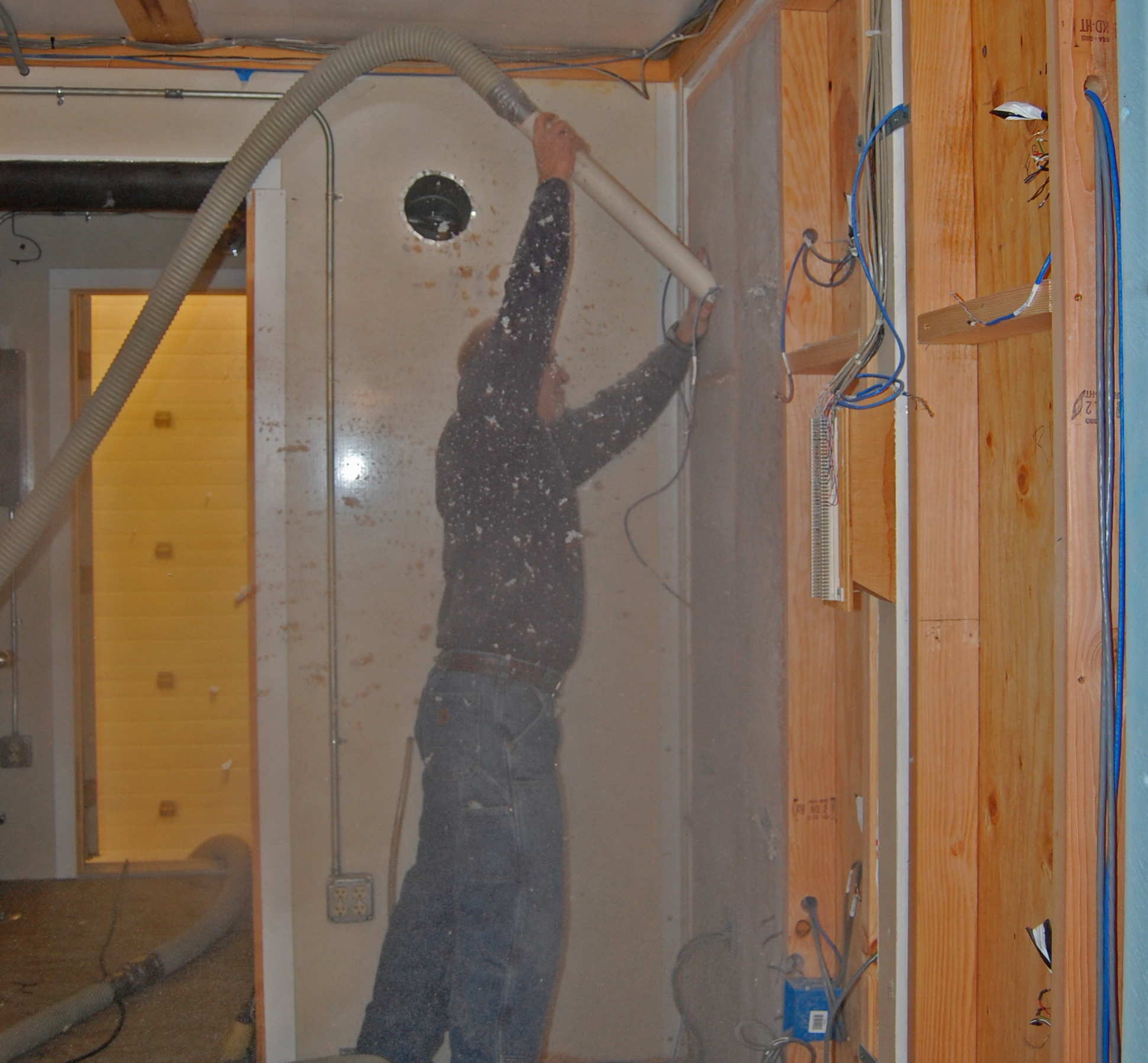
During Week 12, we insulated walls of the second house with six inches of fiberglass batting on the inside and 8 inches of foam board on the outside. We also blew two feet of cellulose insulation into the roof of the first two homes. Cellulose is made from recycled material like newspaper and cardboard.

We also began installing windows in the homes. All windows are triple-pane, low-e argon filled, designed to minimize heat loss and avoid condensation in an extreme climate.

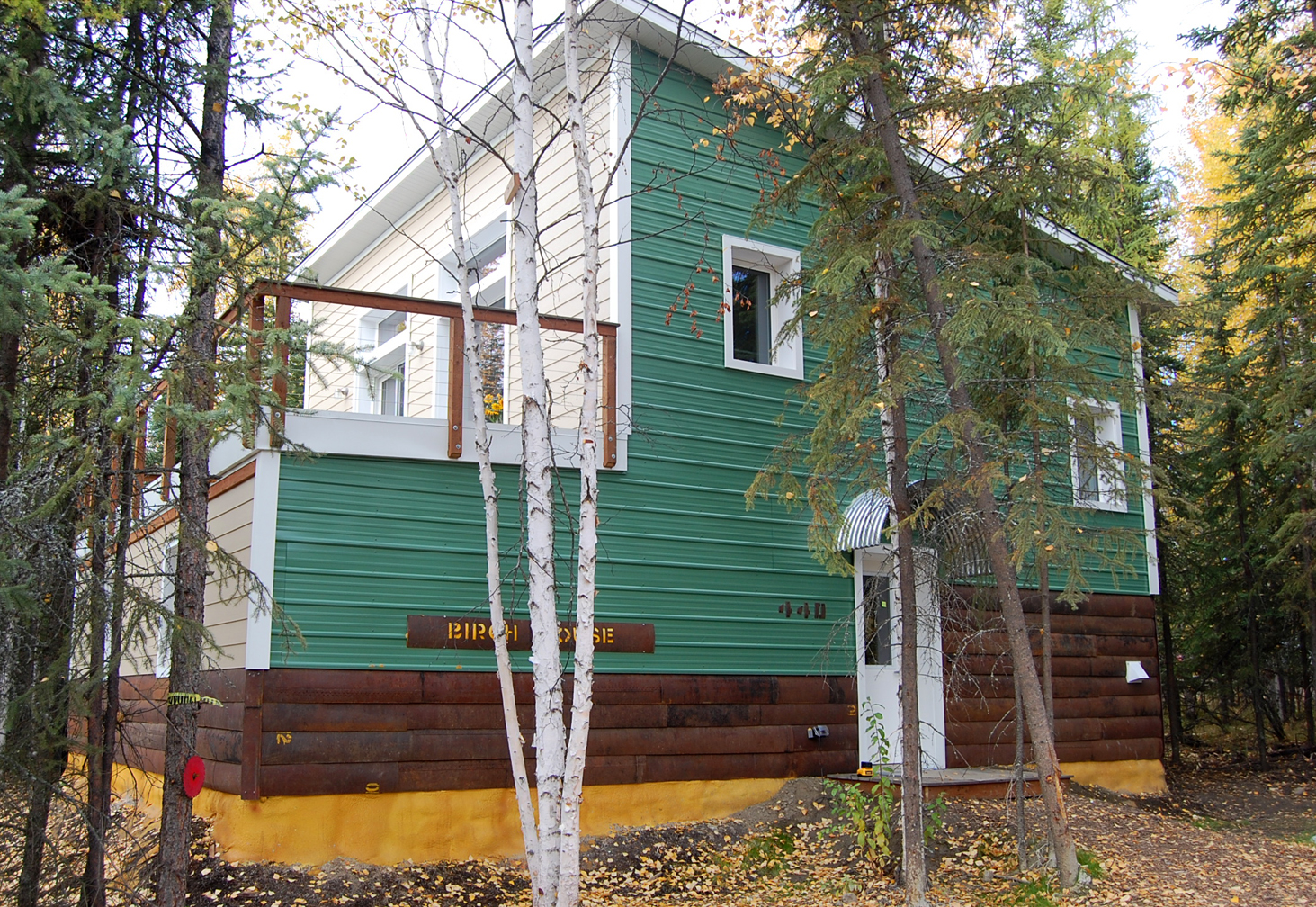
Each home will be sided with a different color combo, with a mix of metal siding and recycled steel pipe.

UAF Sustainable Village Week 11: spray foam, decking & Sheetrock

Monday, July 9th, 2012

Week 11 was a productive one at the Sustainable Village. Workers continued to install EPS foam (2 layers of 4-inch sheets) in three of the homes with a REMOTE wall system. We also sprayed polyurethane foam around the rim joist to seal it up.

Each home has a large, south-facing deck on the second floor. We finished the decks with a spray-applied elastomeric coating, the same stuff used for truck-bed liners, a durable, weather-proof material that is less material-intensive than wood and requires no penetrations in the ceiling. We sprayed foam insulation underneath the deck in the first-floor ceiling to create a warm thermal break.

This week we started hanging Sheetrock in the homes where we had already finished plumbing and electric. The interior is starting to look livable! Now it’s time to select 16 lucky students who will make the Village home. If you’re interested, visit http://www.uaf.edu/sustainability/sustainable-village.


Apply NOW to live in the UAF Sustainable Village!

Friday, July 6th, 2012

Do you seek a different style of on-campus life? Do you want to know how to grow your own food? Are you excited about monitoring and reducing your energy consumption? Are you aware of your personal carbon footprint? If you answered yes to these questions, consider applying for residency for the 2012-2013 academic year at the UAF Sustainable Village!

By Cornerstone on June 15, 2012

Rendering of one home at the UAF Sustainable Village

The UAF Office of Sustainability is now accepting student applications for residency for the 2012-2013 academic year at the new UAF Sustainable Village. This opportunity is for students seeking a different style of on-campus life, wanting to know how to grow your own food and monitoring and reducing energy consumption.

The UAF Sustainable Village, UAF’s newest student housing, is a student-led and -driven initiative. Students have been integral to all stages of the process: from concept to design to construction. It is a demonstration of environmentally sustainable technologies in a residential setting and will provide hands-on experiential learning opportunities. Students will collect and disseminate information about sustainable building and living best practices, and encourage others to live in a more sustainable way.

The Sustainable Village is open to UAF students, sophomores through graduate. Students interested in living in the UAF Sustainable Village for the 2012-13 academic year need to complete this form and attach a signed UAF Sustainable Village Social Contract /Agreement. Selection is based on application and an interview with the Sustainable Village Committee.

Students interested in being part of the innovative, nationally recognized Sustainable Village and feel personally committed to sustainability, are encouraged to sign up. For more information visit the Sustainability Village website for more information or contact sustainability director Michele Hebert at mahebert@alaska.edu or 907-388-6085.

Sustainable Village Week 9

Tuesday, June 12th, 2012

During Week 9, we installed ceiling vapor barriers, continued plumbing and wiring work, and started working on the electrical hook-up for the homes. After heavy rain over the weekend, and the ground is still frozen a few feet down, the site was temporarily transformed into a mud pit. This made it interesting to navigate heavy equipment and dig a trench for the power line. Nevertheless, we will have electricity by the end of the week!