Making Houses Work

Promoting sustainable shelter in Alaska


Archive for the ‘Ask A Builder’ Category

Shallow Frost Protected Foundations: a good option for the right site

Monday, May 6th, 2013
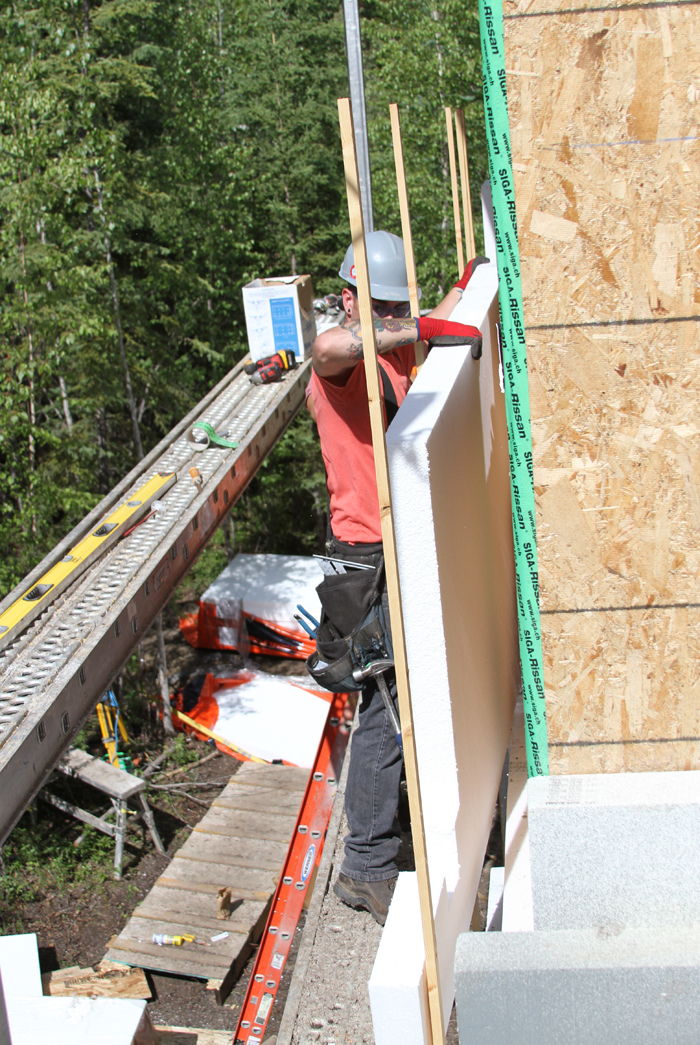
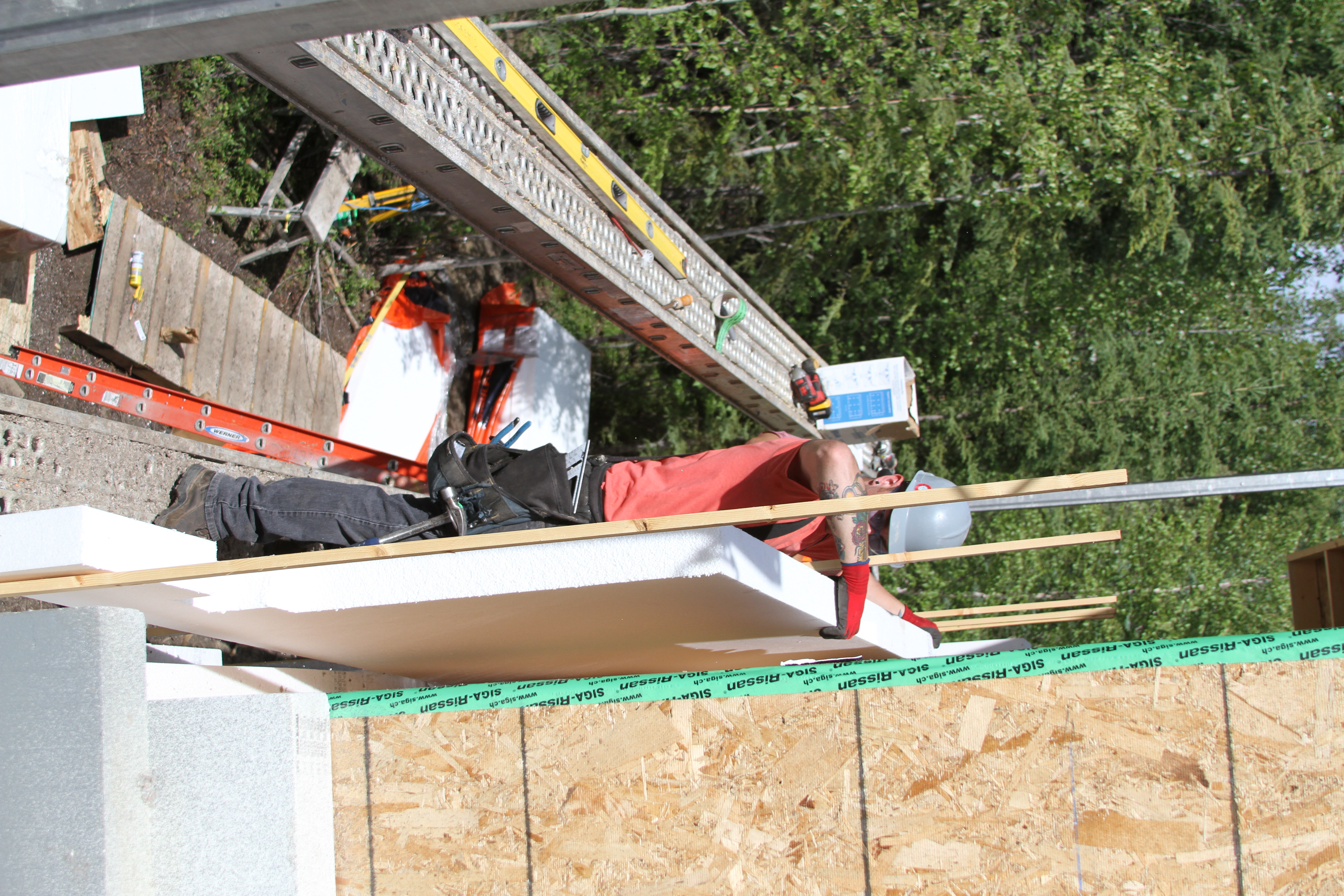
Photo Courtesy Wisdom & Associates. The frost protected shallow foundation uses insulation to create a heat bubble under the structure. The heat bubble keeps the ground underneath and around the structure from freezing, effectively raising the frost depth. The shallower frost depth allows for a shallower footer.

Photo Courtesy Wisdom & Associates. The frost protected shallow foundation uses insulation to create a heat bubble under the structure. The heat bubble keeps the ground underneath and around the structure from freezing, effectively raising the frost depth. The shallower frost depth allows for a shallower footer.

When building homes in cold climates, traditionally the foundation is placed on undisturbed (or compacted) soils and below the frost line to better resist the potentially destructive effects of ground freezing and frost heaving. In Alaska, every region has building codes and/or generally accepted design standards that specify the depth of the local frostline. In Fairbanks, the design depth for footings is a minimum of 42 inches below grade. Installing footings and a foundation wall at this depth can be expensive, and in some cases a shallow frost protected foundation (SFPF) might present a more economical option. As a general rule, a SFPF system is feasible only on ground free of permafrost.

Unlike a standard foundation, a shallow frost protected foundation can be placed well above the frost line — often at depths of about 16 inches below grade, and in some cases less. Since the foundation now rests on soils that normally would freeze seasonally, the key issue is to keep the ground underneath and on the sides of the foundation from freezing. SFPF designs usually depend on foam board insulation laid out far enough horizontally around the perimeter of the footing to ensure that the ground underneath remains thawed year round, no matter how cold it gets.  In essence, the horizontal insulation creates a “heat bubble” in the ground under the building.  A frost protected foundation can accommodate a variety of designs including thickened edge/monolithic slabs and shallow footings.

By code, the horizontal foam board insulation must be protected from sunlight and physical damage. Typically, this means the insulation will get covered with a layer of backfill thick enough to protect it for the life of the structure — although concrete or pavement coverings also might be options (in a high traffic area, for example). Typically, foundations including SFPF systems should extend a minimum of 6 inches above grade to keep wood framing away from ground moisture. Any vertical area above the horizontal insulation also must be well insulated.

In Interior Alaska, SFPF systems are fairly new and a professionally engineered design will buy a lot of peace of mind. Because of site-specific variations in soils conditions and foundation designs, a professional engineer will best be able to calculate the insulation values and installation methods to ensure the foundation will perform properly.

This model is included just to show how heat leaks from the foundation into the ground. “Warm” colors indicate temperatures above freezing. “Cool” colors indicate soil temperatures below freezing. The dashed blue line is the freezing front, which you do not want to contact the foundation.
 

How can I use thermal storage in my home?

Monday, April 29th, 2013
 A 5,000 gallon tank acts as thermal storage in a home heated by a solar thermal system. Photo Courtesy Reina LLC.

A 5,000 gallon tank acts as thermal storage in a home heated by a solar thermal system. Photo Courtesy Reina LLC.

CCHRC recently completed a study on how you can use thermal storage as part of your home heating system.

Thermal storage has recently gained interest in Alaska as it has the potential to increase the efficiency of heating appliances, enhance the use of renewable energy in cold climates, and reduce emissions of certain appliances like wood boilers. It is most suited for renewable energy systems such as solar thermal, geothermal and biomass, but can be adapted to a wide variety of heat sources. The report looks at different design considerations and describes several examples in homes around Alaska.

Thermal storage is a common concept. Many households use water storage tanks to provide domestic hot water, which can range from just a couple gallons to more than 100 gallons. Thermal storage also can be used in space heating systems to store heat for a certain period of time. For example, storing the heat from solar collectors in a buffer tank to use at night; storing heat from a wood boiler in a water tank to allow for a hotter, more efficient burn; or storing heat in the ground to harvest later with a ground source heat pump. In each case, thermal storage can be thought of as a “heat battery” because it holds energy to be used later. In this way, it can enable a heat source with intermittent delivery (like the sun or wind) to still meet demand.

Every thermal storage system needs three basic components: a heat source, a storage medium to store the heat (such as a tank of water, rocks or soil), and a discharge method (heat exchanger) to distribute the heat. Technically, any heat source can be used to charge a thermal storage material, however you should select the fuel and storage material based on availability, cost and compatibility with your home’s needs.

Also, many factors will drive the design of a thermal storage system for your home — such as your heating appliance, your distribution system, your heating demand, your lifestyle and many others. The design of the system also will depend on whether the system is being installed in a new home or being retrofitted into an existing one, as retrofits must accommodate the existing distribution system and available space in the home.

There are various applications of thermal storage throughout Alaska. A net-zero heating home built in Fairbanks several years ago uses solar thermal collectors and a masonry heater to charge a 5,000-gallon insulated water tank that provides heat to a radiant floor system.

The tank also heats domestic hot water in the house.

A different system, located at CCHRC, uses a wood-fired boiler to charge an insulated 1,500-gallon tank of water in the lab. The goal was to fire the boiler hot and fast, which produces more Btu and fewer emissions, and save the heat to use when it’s needed, rather than damping down the boiler so the fire lasts longer.

The water tank heats 1,900 square feet of lab space in the building. The tank was sized to hold as many Btu as the boiler could produce in one firing per day and to provide enough heat for the entire lab over a full winter day.

If you’re considering a thermal storage system, the first step is to consider what your goal is. Do you want to use renewable energy instead of fossil fuels? Are you looking for short-term (a few hours or overnight) or seasonal storage? Systems that are recharged daily are smaller and less expensive than seasonal systems.

Check out the report for an overview of various types of systems used in cold climates, case studies in Alaska, and tips for designing your own system.

Report: www.cchrc.org/docs/reports/thermal_storage.pdf

What should I be aware of when building on permafrost?

Thursday, April 11th, 2013

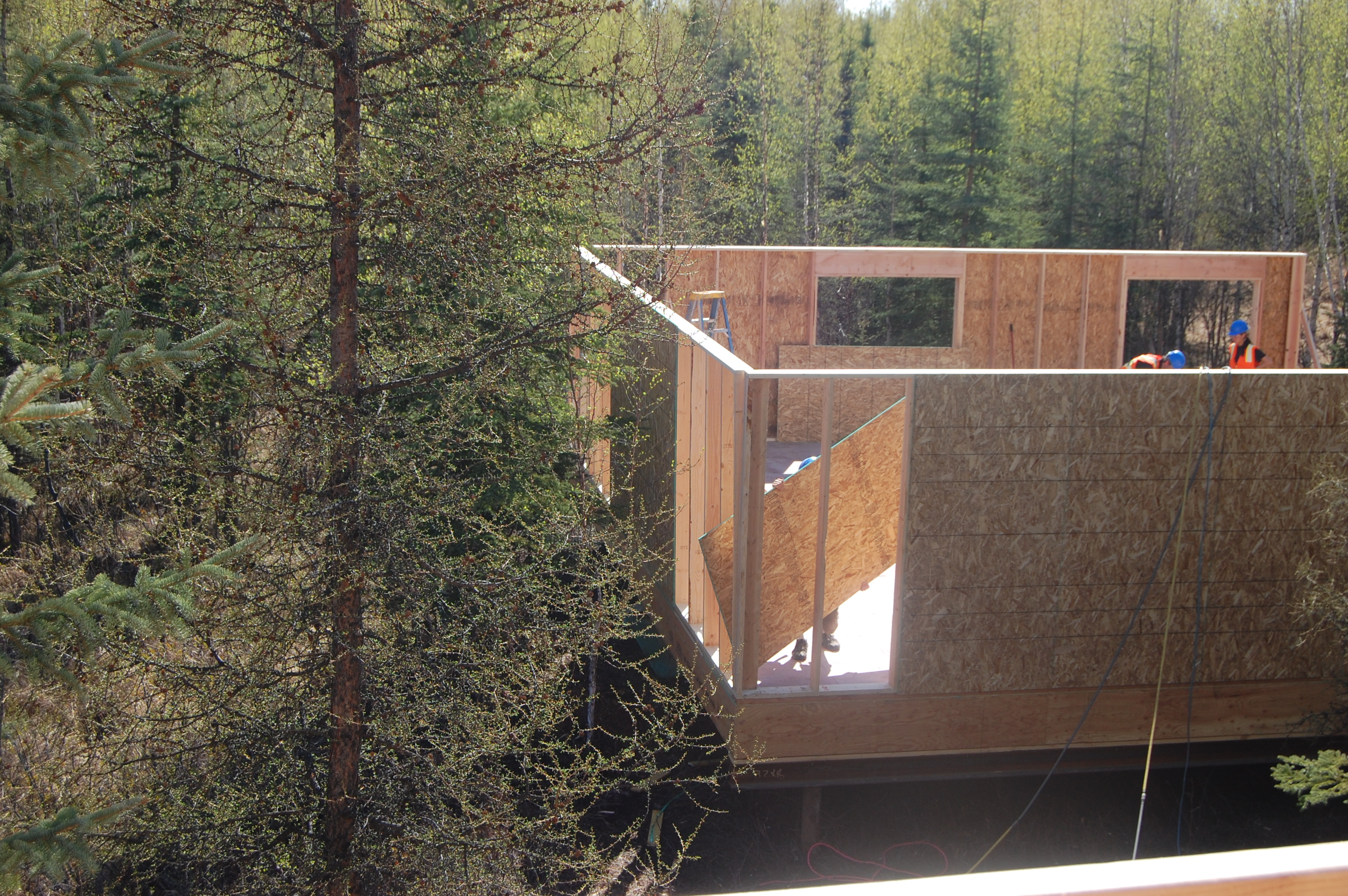
If pilings are used on permafrost, they must be installed to a depth that will both support the structure and resist frost jacking due to seasonal ground movement.

Permafrost is loosely defined as soil and/or rock that remains frozen for more than two years. In the Fairbanks area, permafrost tends to be discontinuous and is concentrated primarily on north-sloping hills and in lower elevations with heavy ground cover. Big trees do not guarantee the absence of permafrost; it might just mean that permanently frozen ground or ice is down far enough that the soils in that spot can support a larger root system. The only way to be certain of what the ground contains is to have a soils test drilling done.

With permafrost, the safest bet is to it avoid it altogether and move to another piece of land. This is easier said than done, particularly because of the scarcity of buildable land near Fairbanks that is affordable. If you decide to build on permafrost, be as strategic as possible. Smaller and simpler structures will tend to fare better than larger, more complicated ones.

Minimal site disturbance is the accepted practice. The trees and the ground cover are your best friend. They protect and insulate the ground from the heat of the summer. A great example is the green moss you find on many of the shaded low-level areas in Fairbanks. Moss has a high insulating value, and in many cases if you dig down a couple of feet, the ground might still be frozen in the middle of summer.

Strategies for construction on permafrost include:

• As a general rule, the organic layer of ground cover provides insulation and should not be removed, as this will increase the risk of thawing any frozen ground underneath.

• Elevate and properly insulate the bottom of your house to prevent heat losses through the floor system from reaching the ground underneath, which can lead to thawing.

• In post and pad construction, use a thick gravel pad that is significantly wider than the house itself (also insulated if possible) to stabilize the ground and spread building loads.

• If wood or steel piles or helical piers are used, they must be installed to a depth that will both support the structure and resist frost jacking from seasonal ground movement.

• Cut trees sparingly to maximize site shading (while permitting for a fire break).

• Build a wrap-around porch, which will help shade the ground around and underneath the house.

• Incorporate large roof overhangs to shed water away from the house and provide shade.

• Install gutters and manage site drainage well away from the house.

• Retain an engineer familiar with local soils conditions to assist in designing a foundation system that will adequately and safely support your home on the soils specific to your site.

• Septic systems also must be engineered to function on permafrost, and remember that conventional systems might risk thawing the ground.


Other Resources 


Permafrost Technology Foundation case studies: http://www.cchrc.org/permafrost-technology-foundation-library

U.S. Permafrost Association website: www.uspermafrost.org/education/PEEP/ptf-manuals.shtml

UAF Cooperative Extension Service online publications at www.uaf.edu/ces.


What’s going on in my crawlspace?

Thursday, April 4th, 2013

Crawl spaces are an area of the house that tends to get neglected. The old adage “Out of sight, out of mind” might apply here. Unfortunately, this also means crawl space problems can go unnoticed until they have an effect on the living space above. At this point, a problem that could have been easily remedied might have progressed into an expensive structural or health-related issue. The crawl space also can present a significant hidden energy drain on a home if not insulated properly.

Good moisture control is of primary concern in a crawl space. This starts outside the building envelope, and many problems can be stopped here in their infancy.

Gutters are a relatively inexpensive addition to a house that can provide huge preventative paybacks. In a climate with lots of rain, a house without gutters can direct lots of water against its foundation. Soils, wood and especially concrete are good conductors of water through capillary action. Picture a paper towel soaking up water — concrete works this way and can carry water great distances. If gutters are not an option, then at minimum the soils around the house should be sloped to direct water away from the building.

Once water reaches the foundation, things get a lot tougher. The structure must be prepared to resist infiltration. Ideally, both concrete and wood foundations should have some form of waterproofing on the outside. If this has deteriorated or was never installed, this might need to be remedied.

Assuming all external sources of moisture penetration have been addressed, the next step is to inspect the interior. With few exceptions, exposed dirt floors should be covered and well sealed with a continuous vapor retarder such as polyethylene with a minimum 6 mil thickness. If the floor will receive traffic, then it might be necessary to use either thicker and/or reinforced polyethylene sheeting or an even more durable membrane such as EPDM rubber. Even a dirt floor that looks and feels “dry” can release significant amounts of moisture, especially after heavy rains.

Another important consideration is radon, a cancer-causing radioactive gas that occurs naturally in the earth. The University of Alaska Fairbanks Cooperative Extension Service advises that if you have never tested your crawl space or basement, cold seasons are the best times to do so. The negative pressures created by combustion appliances, and stack effect in winter time, can bring radon into the home at a higher rate. Although high radon concentrations are considered hazardous, it’s possible that remediation after detection can be relatively simple. Testing crawl spaces is strongly recommended in areas known to have soils with radon concentrations. Test kits and information are available through the CES at 474-1530.

How well a crawl space is insulated and sealed can affect the entire building envelope. In Fairbanks, building codes require foundations to be a minimum of 42 inches below grade to protect the footings from freezing and frost jacking. Anything above that point could be at risk for freezing during the winter. This can mean serious heat losses if the crawl space is under-insulated.

Inspect the foundation walls and floor system closely. If fiberglass insulation was set directly against the inside walls with no moisture protection, or the dirt floor was left exposed, it might be wet and need to be replaced. If the floor joists were insulated, the floor system should be looked at closely. Any exposed ducting should be inspected to make sure all seams are sealed and connected. Be sure that exhaust fan piping (such as dryer ducting) doesn’t just terminate under the floor, but vents directly outside.

If you need to add or replace insulation, rigid foam and spray foam are good options. These types have high R-values and also qualify as vapor retarders. If you use foam, especially below-grade, make sure it’s approved by the manufacturer for your specific application. Spray foam and foam board may have certain restrictions or limitations in crawl spaces because of local fire codes. Some brands of foam insulation might meet fire code at a given thickness, while others might not.

In addition, it might be possible to use either a coat of fire retardant paint, drywall or fiberglass insulation to protect the foam board if required. The best source of information regarding current fire code considerations for foam insulations can be found at the local building department. Keep in mind that typically the local fire codes will need to be met if the home is put up for resale and is subject to inspection.

Tomorrow would be a good time to peek under the floor. The crawl space is integral to the foundation of the house and, in some cases, the largest source of unregulated airflow into the home. It is not a good place to let moisture, poor air quality or bad insulation go unchecked.

Is a pellet stove right for me?

Thursday, March 14th, 2013

First firing of the pellet stove at the UAF Sustainable Village, which serves as a backup heater in the northwest house.


Pellet stoves are a relatively new wood heating appliance, similar to wood stoves in concept but they have automated operation and burn processed biomass.

Pellets are manufactured from compacted sawdust, wood chips, agricultural crop waste, waste paper and other materials. They can also be made from biomass fuels such as nutshells, corn kernels, sunflowers and soybeans. Pellets are about 1 inch long and look like rabbit food. The pressure and heat created during production binds them together without the need for glue. Pellets are manufactured in Alaska, including at Superior Pellet Fuels in North Pole, and are available at local hardware stores and by delivery from manufacturers.

How it works

Stoves are designed to heat a space directly. The stove consists of a combustion chamber, ashtray and flue to vent exhaust gases. In a pellet stove, the flue can be direct-vented through a wall, meaning that no chimney is required. Pellets are stored in a hopper near the stove. The hoppers come in various sizes, but generally can hold enough pellets for the stove to run for more than a day.


Pellet stoves use electricity to run three motorized systems:

  • A screw auger feeds pellets into the fire at a controlled rate
  • An exhaust fan vents exhaust gases and draws in combustion air
  • A circulating fan forces air through the heat exchanger and into the room

The motorized systems are controlled by a control system and allow pellet stoves to operate automatically.

Pellet stoves do not have a distribution system. The fire inside the combustion chamber causes the stove to warm up and radiate heat throughout a room. Pellet boilers are available that use a hydronic distribution system.

Maintenance

As with other wood-burning devices, pellet stoves require frequent maintenance, yet less than a wood stove. The stove should be inspected regularly. Also, the hopper must be filled and the ashtray should be emptied on a weekly basis (though this depends on the size of the hopper and ash tray and the frequency of use).

Additionally, the stove should have a yearly check-up. Heating professionals can check that the doors, gaskets, electric connections and seals on the stove are in good condition. They can also check the chimney for creosote, rust, and corrosion.

Efficiency Range

Pellet stove efficiency ratings are published by manufacturers. The efficiency ratings combine electrical efficiency, combustion efficiency (a measure of the heat produced from burning fuel), and heat transfer efficiency. Efficiencies can range from 78–80%. More efficient stoves lose less heat up the chimney and deliver more heat into the home.

For more information on home heating devices check out these resources:

–Consumer Guide to Home Heating:

http://cchrc.org/docs/reports/Consumer_Guide_Home_Heating.pdf

–Your Northern Home: http://cchrc.org/yourhouse

Should I consider replacing my heating system?

Tuesday, February 12th, 2013

If you’re thinking about replacing your heating system, here are some questions to ask yourself. A “yes” to any of them may warrant a call to an energy rater or heating contractor.

Have you recently upgraded the thermal envelope of your house?

The thermal envelope of your house is everything that separates the living space from the outside, including walls, doors, windows, insulation and the roof. If you’ve been sealing leaks, eliminating drafts, replacing old windows with double-pane or triple-pane models, or adding insulation, you’ve been making your home more energy efficient.

With thermal envelope upgrades, the home will lose less heat in the winter, and therefore it’s likely the heating appliance won’t need to provide as much energy. Depending on the reduction in energy use, it is entirely possible that your heating appliance could be come oversized, and a smaller system may operate more efficiently

Is your current heating appliance more than 20 years old?

Technology marches on. Appliances made today are far more efficient than older models. Not only do they use less fuel, they are also safer and come with more advanced controls to improve efficiency. Also, the methods to size a heating system are better and can be tailored to individual homes.

Is your house uncomfortable?

Do you have rooms that are always too hot or too cold? This can be the result of air leaks, inadequate insulation, an improperly sized heating appliance, or lack of zoning in your heating system. Start with a call to an energy rater to find out which improvements you can make to solve this problem. If you need to add insulation or seal leaks, take care of that before upgrading your heating system so that the heating system will be sized properly for your home.

Who to call?

Energy raters will examine your entire house, measuring doors and windows, checking insulation levels, assessing your heating system and testing air leakage rates. The rater will input the data collected from the home inspection into AKWarm — a software program maintained by the Alaska Housing Finance Corporation. The AKWarm program is then able to calculate a home’s theoretical energy requirements, which it prints out as part of an energy rating certificate. This rating describes how efficient different components of your home are on a point scale. Included in the rating are suggestions to improve performance, which may or may not include the heating system. The rating will help prioritize upgrades, show the energy benefits of each one and may qualify you for the Alaska Home Energy Rebate Program.

Heating contractors will focus specifically on your heating system, evaluating its current efficiency and whether it is sized properly. A contractor can sometimes test for the efficiency of the distribution system (depending on the type). The contractor will provide you with information on improving your current system and purchasing new appliances.

How can I keep moisture and ice from forming on my windows in the winter?

Saturday, December 15th, 2012

Windows can be a barometer for how much humidity is inside the home.

On really cold days, you might notice condensation forming on the inside of your windows. This can be caused by one or a combination of factors: excess humidity, inadequate ventilation, or poor windows. To understand and correct a particular issue in your home, you need to know some basic properties of moisture.

Condensation occurs when water vapor (a gas) turns into water droplets as it comes into contact with a cold surface. The point at which this happens depends on the temperature and humidity of the inside air. The warmer the indoor air, the more water vapor it can “hold,” and moisture can better remain in the vapor state. When air moves next to a cold window, the temperature drops and it can’t “hold” as much vapor.  That’s when you start to see condensation forming.

For example, if the indoor temperature is 70 degrees and the outdoor temperature is 0, then moisture will begin to condense on a single-pane window when there is roughly 15 percent relative humidity in the house. A double-pane window will cause condensation at around 25-40 percent relative humidity, and a triple-pane window at between 30-50 percent.  These are rough numbers are based on average window insulation values.

The recommended indoor humidity levels for occupant health and comfort range from 30-50 percent. The general rule in a cold climate, however, is to target the lower end of this spectrum due to the risk of condensation within walls and ceilings. If your house has adequate mechanical ventilation, humidity is less of a concern. In Fairbanks, it’s tough to maintain anything close to 50 percent humidity in a properly ventilated house, because the winter air is so cold and dry.   Because of its low moisture content, the inherent dryness of Fairbanks winter air is good for homes but not always the occupants, since discomfort related to the dryness can be problematic.

What can I do about it?

Three things: make sure your home is properly ventilated, aim for less than 40 percent relative humidity to keep both you and your home healthy, and consider replacing your windows or adding moveable window insulation during cold months.

If you already use mechanical ventilation and have low interior humidity, but are still having problems, you may need to examine your ventilation setting. If you have a heat recovery ventilator (HRV), it may be recirculating too often, which can contribute to increased moisture build up in the air. Recirculation mode closes the connection to the outside and brings exhaust air back into the rooms.  Recirculation mode keeps the HRV core defrosted and saves energy, but it is also possible for it to run for too long.  Some experimentation with the HRV settings may be necessary.   For example, in 20/40 mode the HRV brings in fresh air for 20 minutes and then recirculates for 40 minutes, and likewise for 30/30. If you’re getting condensation in your current mode, try decreasing the amount of time the unit recirculates.

Also make sure air is allowed to circulate—either passively or mechanically—throughout the entire house. If you close the door to the bedroom, the air can become cold and moist enough to condense on windows.

Older, poorer performing windows can create problems no matter what you do to your interior air. Bad seals around operable windows, metal spacers between the panes, and inadequate insulating value can cause the window surface to get cold enough for condensation to occur.  If you’re not ready to invest in new windows, consider some type of moveable window insulation like foam board (on the outside) or well-sealed plastic film (on the inside). A CCHRC guide to different types of window insulation can be found at http://www.cchrc.org/evaluating-window-insulation.

How does the recirculation mode on an HRV work, and is it safe in a cold climate?

Friday, November 30th, 2012

We often stress proper ventilation as the key to maintaining a healthy indoor environment in a home, and promote heat recovery ventilators (or HRVs) as the best option for energy efficient ventilation in a cold climate.

HRVs exchange stale indoor air with fresh outdoor air, capturing heat from the outgoing air to pre-heat incoming air. They exhaust excess humidity, carbon dioxide, and indoor pollutants from pet dander, cleaning supplies, offgassing furniture, and other sources. The role of the HRV becomes increasingly important as homes are built tighter to save energy, which cuts down on passive air exchange.

To maximize the benefits of having an HRV, it helps to understand the different operation modes. One of the often-debated modes included in most HRVs in the United States is the recirculation mode. This mode is not often used in Europe because it is believed that the health risks outweigh the energy benefits. This article provides a description of the recirculation mode and gives pros and cons for the house and its occupants.

Under normal operation, the HRV replaces moist indoor air with fresh outdoor air. While HRVs recover much of the energy from the heated air during winter months, a considerable amount of heat is still lost due to the frigid temperatures in the Interior Alaska. In addition, extremely cold outdoor air contains virtually no moisture, which can result in very low humidity levels indoors—a negative for some homeowners.

In recirculation mode, the unit closes the connection to the outside and brings the exhaust air back into the rooms. This saves a lot of energy, since there is no cold air coming in from outside. On the other hand, moisture and indoor pollutants are no longer being flushed out of the home, and their concentration will continue to rise and can eventually reach harmful levels. Recirculation can also spread unwanted smells from more to less polluted areas, such as from the bathroom to the living room.

In order to maintain sufficient air exchange, HRVs offer modes where these two strategies can be combined. For example, 20/40, 30/30, or Smart Mode. In 20/40, the HRV will bring in fresh air for 20 minutes and then recirculate for 40 minutes (likewise for 30/30). Smart modes usually require some kind of sensor (humidity or carbon dioxide) to dictate when to ventilate and when to recirculate, based on which measurements the HRV controller decides is more relevant at any given time.


The major advantage of recirculation mode is that it saves energy and redistributes heat throughout the house, particularly helpful if you have a localized heat source like a woodstove. On the flip side, it can potentially transfer pollution from one room to another rather than expelling it altogether. While Smart Mode seeks a happy medium between the two, there are still times when recirculation mode should not be used at all—if someone is cooking, smoking, or during times of high occupancy. One way to override the Smart Mode during these situations is with a push-button timer, a common feature of HRV installations that temporarily ventilates the HRV during such events.

If you do use recirculation mode, here are some best practices to maintain good air quality:

–High quality filters (High Efficiency Particulate Filters, HEPA, in combination with activated carbon filters) should be added to supply duct to mitigates odor or pollution from spreading

– Constant recirculation should only be used when the building is unoccupied

–If recirculation is used during occupied periods, make sure the HRV is exchanging indoor and outdoor air for at least part of every hour

While recirculation offers the perk of saving energy, if you rely on it too much, you can undermine the benefit of having an HRV—to maintain indoor air quality that is healthy for both humans and structures.

What are HRVs and how do they work?

Friday, September 14th, 2012

Heat recovery ventilation (HRV) systems are becoming increasingly common in cold climate construction and are almost indispensible in today’s super-insulated, airtight homes. As older homes are receiving energy retrofits and becoming tighter and more insulated, they are facing the same indoor air quality issues you find in new construction. HRVs improve the indoor air quality of your home and save more energy than other types of ventilation. This article provides an overview of the basic purpose and advantages of HRVs.

The main job of the HRV is to supply fresh outdoor air to the house while expelling stale indoor air — which can contain things like moisture, animal dander and gases from combustion appliances and carpets. This is especially important in a home that is too tight to rely on passive air exchange.

At the heart of the HRV is a heat exchanger (often called a “core”) where exhaust air flows next to, but separate from, supply air. Here the cold incoming air is warmed by the heated outgoing air, recovering heat that would otherwise be lost. Most HRVs recover 70 to 90 percent of the heat, depending on the unit and controls, making it much more efficient in a cold climate than a simple exhaust fan that blows warm air directly outside. One of the newest and most advanced models is capable of recovering more than 90 percent of the heat from exhaust air.

The ducting of an HRV system typically supplies fresh air to bedrooms and living areas while exhausting humid air from bathrooms, kitchens, laundry rooms and crawlspaces. The HRV does not eliminate the need for a cooking fan, so a range hood still should be the main outlet for grease and smoke above the cook stove.

The HRV is designed to be balanced, meaning it takes in as much air as it exhausts, maintaining close to neutral pressure inside the home. It should not create a negative pressure in the home, like an unregulated exhaust fan might, which can cause appliances to back draft (suck in air from an exhaust flue and expose you to dangerous gases). It’s also important to remember that HRVs are not meant to supply air to combustion appliances.

Efficient residential units use about as much power as a 60-watt light bulb when running, and are getting more and more efficient. As with any appliance, an HRV requires some maintenance, such as checking the built-in filters every fall to see if they need to be cleaned or replaced.

In addition to providing reliable ventilation in a home, HRV systems can serve several other roles. You can install an in-line filter system on the warm-side supply air port that will filter particles and odors from the incoming air. For example, in the winter this can help keep particulate pollution (from wood-burning and other sources) out of your home.

With the right controls, an HRV can also work in recirculation mode, which distributes heat to hard-to-reach areas in the house (a big help for occupants using a woodstove). Although be aware that recirculation reduces overall fresh air exchange and can redistribute odors from unwanted areas in the house. If you own an older unit, a control upgrade may be a beneficial and cost-effective option.

While it may seem expensive up front, you should look at an HRV system as an investment in a healthy home and peace of mind. In this climate, indoor moisture can cause problems not just for the structure, potentially condensing in the walls and leading to mold and rot, but also for occupant health. An HRV will protect the occupants as well as the structure by removing excess moisture before it has a harmful effect.

If you’re thinking about purchasing a system, make sure you learn about the specifics and find an installer who is willing to educate you and stand behind their work.

What is reflective insulation and does it work in a cold climate?

Thursday, September 6th, 2012

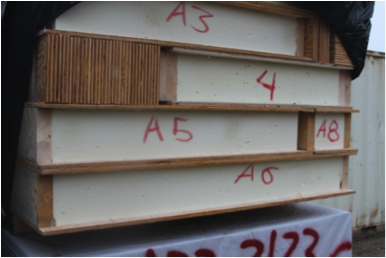
Reflective insulation is typically made of aluminum foil on a backing like rigid foam (pictured here), plastic film, polyethylene bubbles or cardboard.

Reflective insulation is a type of thermal insulation with at least one reflective surface that is installed so that the surface faces an air gap. It is usually made of an aluminum foil installed on a variety of backings, such as rigid foam, plastic film, polyethylene bubbles or cardboard.

CCHRC recently researched the use of reflective insulation in cold climate construction, reviewing other studies and testing two foam insulations with reflective facers. Researchers found that the use of reflective insulation has very little to offer cold climate construction.

To understand how it works, you need to understand the three types of heat transfer: convection is heat transfer through air movement; conduction is heat transfer through solid materials that are touching; and thermal radiation is when heat travels in electromagnetic waves, like energy from the sun.

Reflective insulations are designed to reduce heat transfer through radiation by placing a surface that reflects thermal radiation in combination with an air gap. The reflective surface reflects most of the thermal radiation toward the air space, preventing it from being absorbed by the material. If you don’t have an air space, then the heat is lost by  conduction through the reflective surface. In real life, all these forms of heat transfer occur simultaneously. (Unless you travel to space to remove the atmosphere (air) from the equation. This partially explains why NASA took an interest in reflective insulations, as they faced very different conditions than we do in Alaska.)

In warmer climates, it is common to add reflective insulation in the attic to reduce heat transfer from the roof decking to the underlying insulation, reducing overall solar heat gain within a building. But in cold climates, we have different concerns. For example, homes lose heat primarily from air leaking through the attic and walls and conduction through all components of the house. Because most heat loss occurs this way, reflective insulation would not make much difference in reducing the overall heat loss of your home.

To illustrate this point, let’s examine part of a house where a reflective insulation system is added. If you created a 1-inch air gap into the wall or ceiling with a reflective surface on one side, you could expect to gain around R-2. But walls and ceilings are typically insulated in the range of R-20 to R-60, and reflective insulation faces sharp diminishing returns if multiple layers are installed. Also remember that the air gap needs to prevent airflow and the reflective surface needs to stay clean from dust and moisture.

In addition, many reflective insulations can increase the potential for moisture problems in your home if not placed properly, as they often act as strong vapor retarders. So if you’re using these products, you need to consider not just how they affect heat loss, but also moisture flow.

Watch out for claims about reflective insulations providing benefits that go beyond R-value. All of the product’s insulation value is captured by the R-value, just like fiberglass batts, foam board, and other insulation products. If there are additional benefits, such as reducing air leakage, then those benefits can be measured and compared to other air barrier systems.

In essence, reflective insulation may help in warmer climates but is not a great fit for a cold place like Alaska.